Yes, full mouth extraction with immediate dentures removes all remaining teeth and fits a denture on day 1 of your recovery. The American Dental Association (ADA) says the denture goes in on extraction day, so no toothless period follows. MedlinePlus says sockets heal in 1 to 2 weeks, and the denture needs adjustment as the jaw changes shape over time.
Key Takeaways
- An immediate denture is inserted on the same day the remaining teeth are removed, according to the ADA.
- Local anesthetic numbs the area, and sedation may be added, according to MedlinePlus.
- The sockets take 1 to 2 weeks to heal, and hard or crunchy foods wait 1 week.
- The jaw ridge keeps changing for months, so an immediate denture may need a reline or remake.
- Fever, chills, or heavy bleeding several hours after surgery call for a dentist visit.
What Is Full Mouth Extraction with Immediate Dentures?
Full mouth extraction with immediate dentures removes all remaining teeth and fits a ready-made denture the same day. The ADA defines an immediate denture as a removable denture inserted on the day the remaining teeth are removed. The patient does not go without teeth during healing.
The ADA states the dentist takes measurements and makes models of the jaw at a preliminary visit. That visit comes before any immediate dentures are made in the lab.
Full mouth extraction and dentures replace natural teeth with a removable appliance. According to the CDC National Center for Health Statistics, 12.9% of adults aged 65 and older had complete tooth loss in 2015-2018. The rate was 8.9% at ages 65-69, 10.6% at ages 70-74, and 17.8% at age 75 and older.
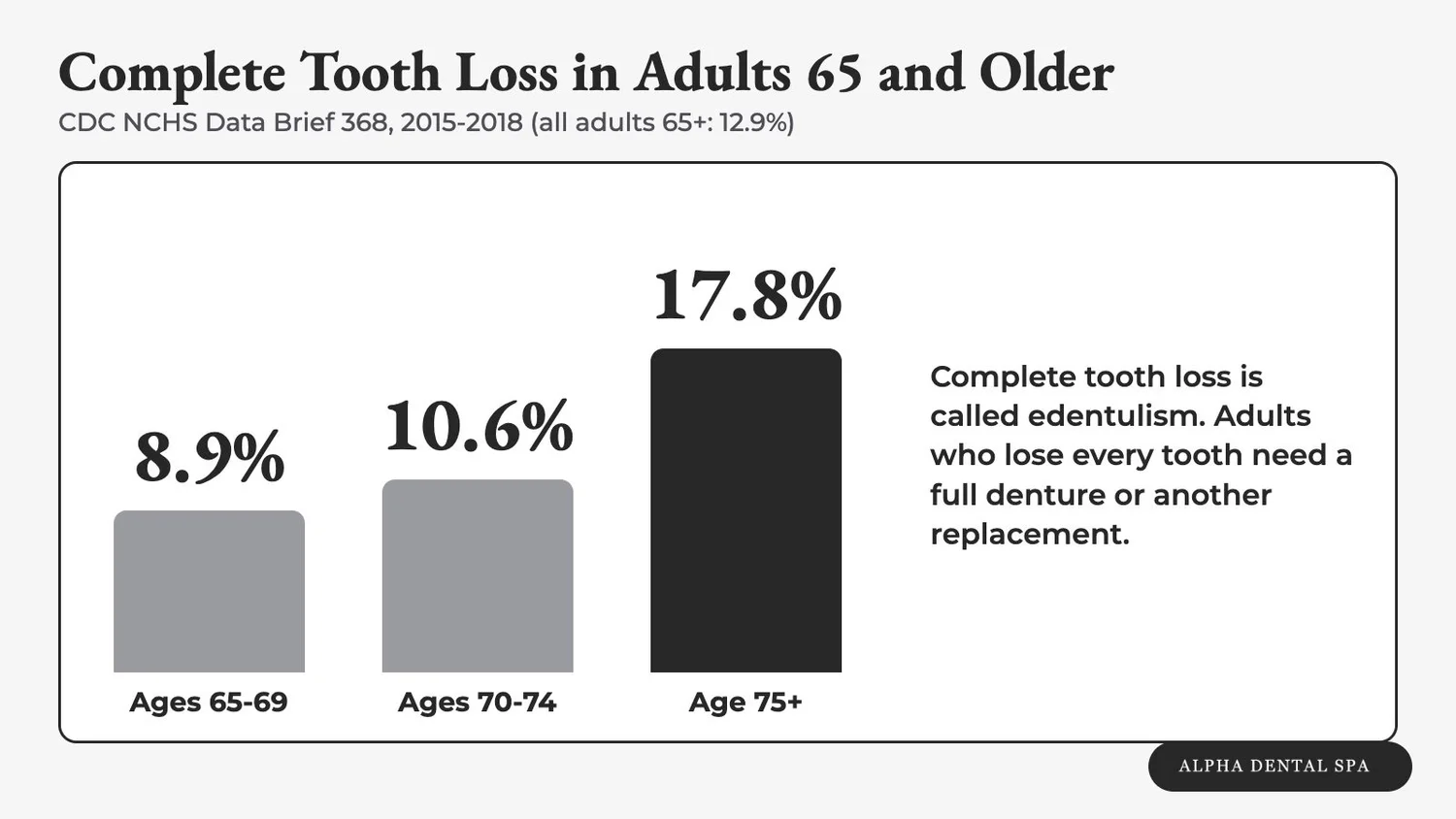
The chart above shows complete tooth loss by age group. Patients also describe the plan as full teeth extraction and dentures, and the steps stay the same.
Can You Get Immediate Dentures After Full Mouth Extraction?
Yes, you can get immediate dentures after full mouth extraction when the dentist plans them before the teeth are removed. The ADA says measurements and jaw models come first. Dentures made after the sockets heal are conventional dentures instead.
A dentist decides whether full mouth extraction and immediate dentures suit the gums, the remaining teeth, and the health history. The treatment plan sets whether tooth extraction and immediate dentures cover the upper arch, the lower arch, or both.
A dentist reviews each tooth before recommending a tooth extraction. Some teeth may stay in place, as the later section on teeth that should not be removed explains.
How Does Full Mouth Extraction with Immediate Dentures Work Step by Step?
Full mouth extraction with immediate dentures works in five steps, from jaw measurements to adjustment visits after healing. The full mouth extraction immediate dentures sequence follows the ADA and MedlinePlus descriptions below.
- Preliminary visit: the dentist takes measurements and makes models of the jaw, according to the ADA.
- Anesthesia: a local anesthetic numbs the area so you do not feel pain, according to MedlinePlus.
- Extraction: the dentist removes the remaining teeth, and damp gauze over the sockets helps stop bleeding.
- Denture placement: the immediate denture goes in on the same day, according to the ADA.
- Follow-up: the dentist adjusts the fit, and the denture may be relined or remade after the jaw heals.
Each step happens in this order so the denture covers the gums as soon as the teeth are gone. The next question covers the anesthesia step.
Do They Put You to Sleep When They Pull All Your Teeth for Dentures?
Dentists do not always put you to sleep when they pull all your teeth for dentures. A local anesthetic numbs the area first. MedlinePlus says you may also be given sedation so you are relaxed and asleep. The dentist chooses numbing, sedation, or both after a health review.
MedlinePlus advises telling the dentist about every medicine you take and your medical history. Sedation also means arranging a ride home with another adult.
How Painful Is a Full Mouth Extraction?
A full mouth extraction is not felt as pain during surgery because the local anesthetic numbs the area. MedlinePlus says pain can begin as the numbing medicine wears off. The dentist recommends pain relievers such as ibuprofen or prescribes pain medicine.
Pain after extractions responds to rest and a cold compress. MedlinePlus advises a cold compress for 10 to 20 minutes at a time, with ice wrapped in a towel. MedlinePlus lists continued pain several hours after extraction as a reason to call the dentist.
What to Expect After Full Mouth Extraction with Immediate Dentures?
What to expect after full mouth extraction with immediate dentures is a denture on day one, sore gums, and extra saliva. The fit also needs adjusting. The ADA says new dentures may feel awkward for a few weeks. Minor irritation or soreness is not unusual, and saliva flow may temporarily increase.
Gums and bone heal on their own schedule, so each follow-up visit checks the fit. The timeline below summarizes the first weeks.
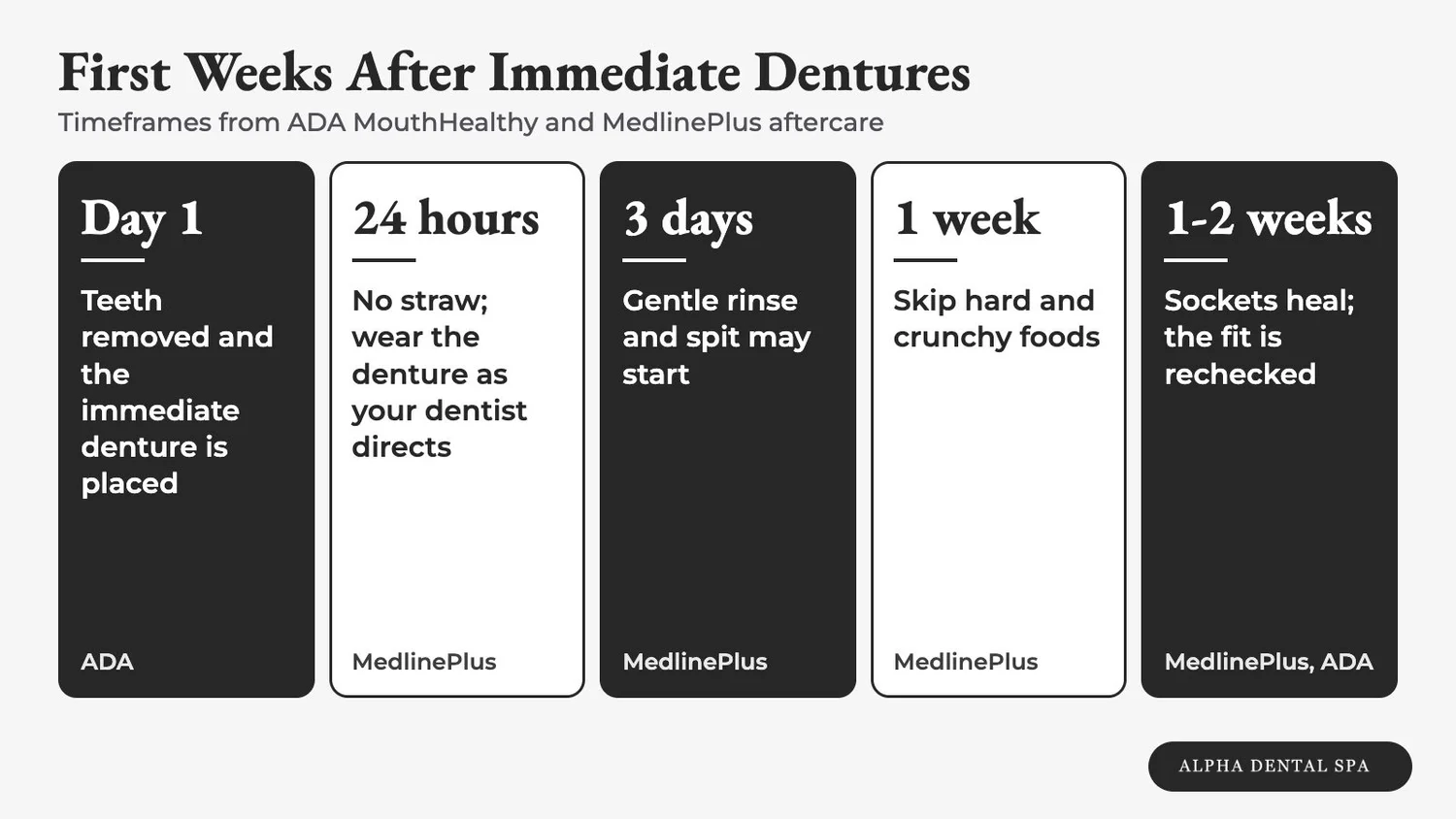
The timeline lists the first milestones from day one through week two. The next three questions cover sleep, work, and eating.
How Many Nights Should I Sleep with Immediate Dentures?
You sleep with immediate dentures in place for the first night, and often longer, only as the dentist directs. A typical written instruction asks for continuous wear for the first 24 hours to help control bleeding and swelling. Follow the dentist's written schedule over any general guide.
The dentist also tells you when to remove the denture for the first time. Cleaning and storage then follow the ADA advice to keep dentures covered in water when they are out.
How Long Should I Take Off Work for Full Mouth Extraction?
Time off work after full mouth extraction depends on your job, the anesthesia used, and your dentist's advice. MedlinePlus says the sockets take 1 to 2 weeks to heal. Ask the dentist for a specific number of days before the appointment.
Sedation adds a rest day because a driver must take you home. Desk work and physical work place different demands on healing gums.
How Long After Immediate Dentures Can You Eat Normally?
Eating normally after immediate dentures returns gradually. MedlinePlus says to eat soft foods until the wound heals and avoid hard or crunchy foods for 1 week. Soft foods come first, such as yogurt, mashed potatoes, soup, avocado, and bananas.
The ADA says dentures can feel awkward for a few weeks. Chewing then feels more natural as the cheek and tongue muscles learn to hold the denture. MedlinePlus also says not to drink from a straw for at least 24 hours.
What Is Normal and When Should You Call Your Dentist?
Soreness, mild swelling, and extra saliva are normal after full mouth extraction. Fever, chills, or heavy bleeding call for a dentist visit. The table below separates the two groups using ADA and MedlinePlus lists.
| Sign | Normal or Call | Source |
|---|---|---|
| Bruising and swelling at the site | Normal | MedlinePlus |
| Numbness that fades in a few hours | Normal | MedlinePlus |
| Extra saliva and minor soreness | Normal | ADA |
| Fever or chills | Call the dentist | MedlinePlus |
| Continued pain several hours after surgery | Call the dentist | MedlinePlus |
| Excessive bleeding several hours after surgery | Call the dentist | MedlinePlus |
| Denture stops fitting well or breaks | Call the dentist | ADA |
Severe swelling or pus also appears on the MedlinePlus warning list. Patients who cannot reach their dentist after hours can use urgent dental care for these signs.
How Long After Your Teeth Are Pulled Can You Get Dentures?
Dentures can be placed the same day the teeth are pulled when they are immediate dentures. The ADA says conventional dentures are placed after tissues heal, which may take several months. Immediate dentures remove the waiting period.
Lab work and fittings follow a set denture timeline before the final set arrives.
Do I Have to Go Without Teeth While Waiting for Dentures?
You do not have to go without teeth while waiting for dentures when you choose an immediate denture. The ADA says you do not have to be without teeth during the healing period. The denture may need a reline or remake after the jaw has healed.
What Is the Difference in Immediate Denture vs Complete Denture?
The difference in immediate denture vs complete denture is timing. An immediate denture goes in on extraction day, and a complete denture waits for healing. The ADA calls the complete type a conventional denture. The table lists both side by side.
| Feature | Immediate | Conventional |
|---|---|---|
| When it is placed | Same day as extraction | After tissues heal |
| Time without teeth | None during healing | Healing period first |
| Measurements taken | Before the teeth are removed | After the jaw heals |
| Later changes | May need a reline or remake | Made for the healed jaw |
The graphic below repeats the ADA definitions in a side-by-side panel.
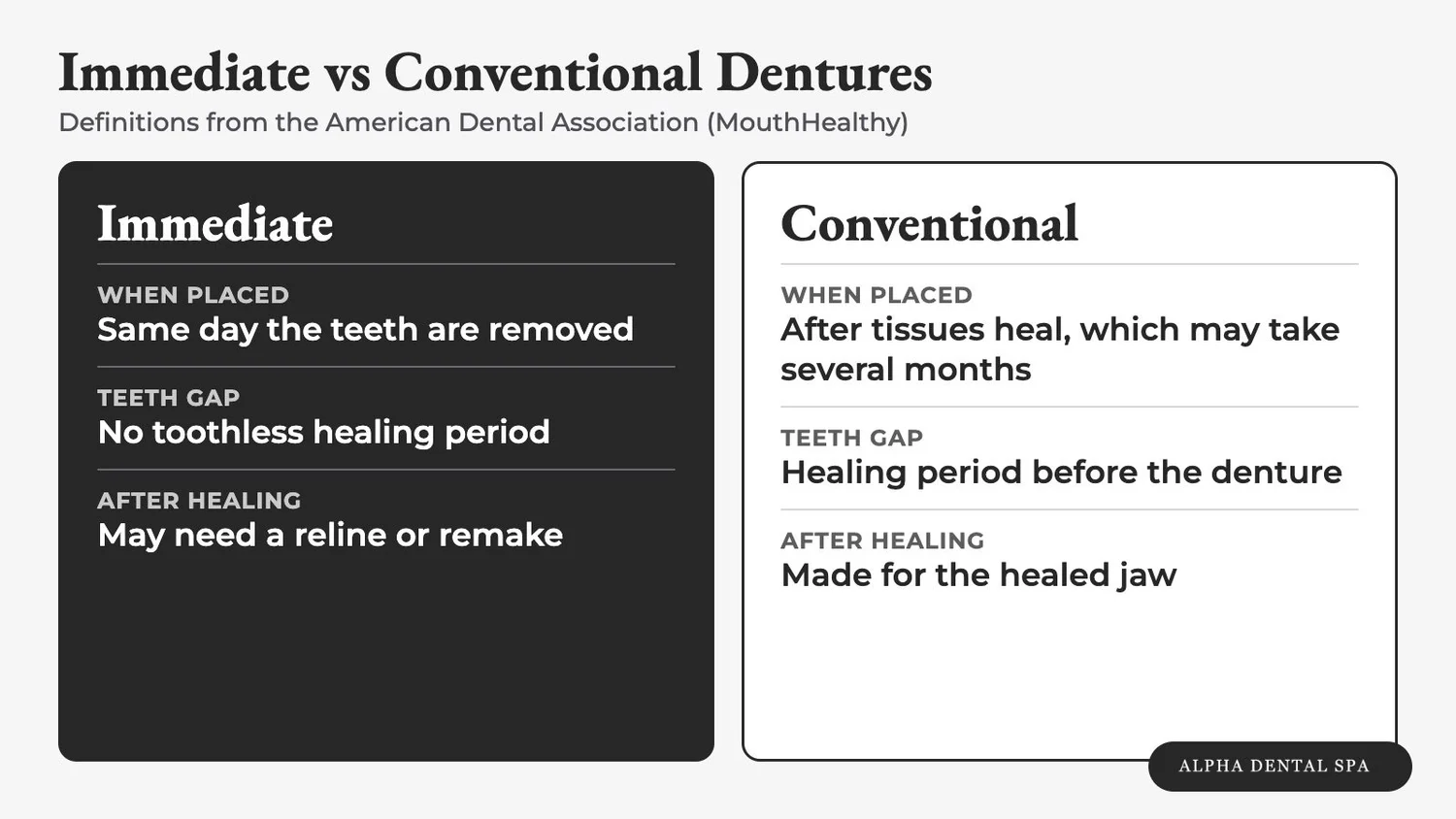
A conventional set takes longer to start, and an immediate set takes more adjustment afterward. The next section explains why.
What Are the Downsides of Immediate Dentures?
The downsides of immediate dentures are a changing fit, extra adjustment visits, and a possible reline or remake. The ADA says new dentures feel awkward for a few weeks. The fit changes because the jaw reshapes after extraction.
A systematic review of 20 studies by Tan and colleagues in Clinical Oral Implants Research measured that change. Horizontal ridge reduction was 3.79 mm and vertical reduction was 1.24 mm on the buccal side at 6 months.
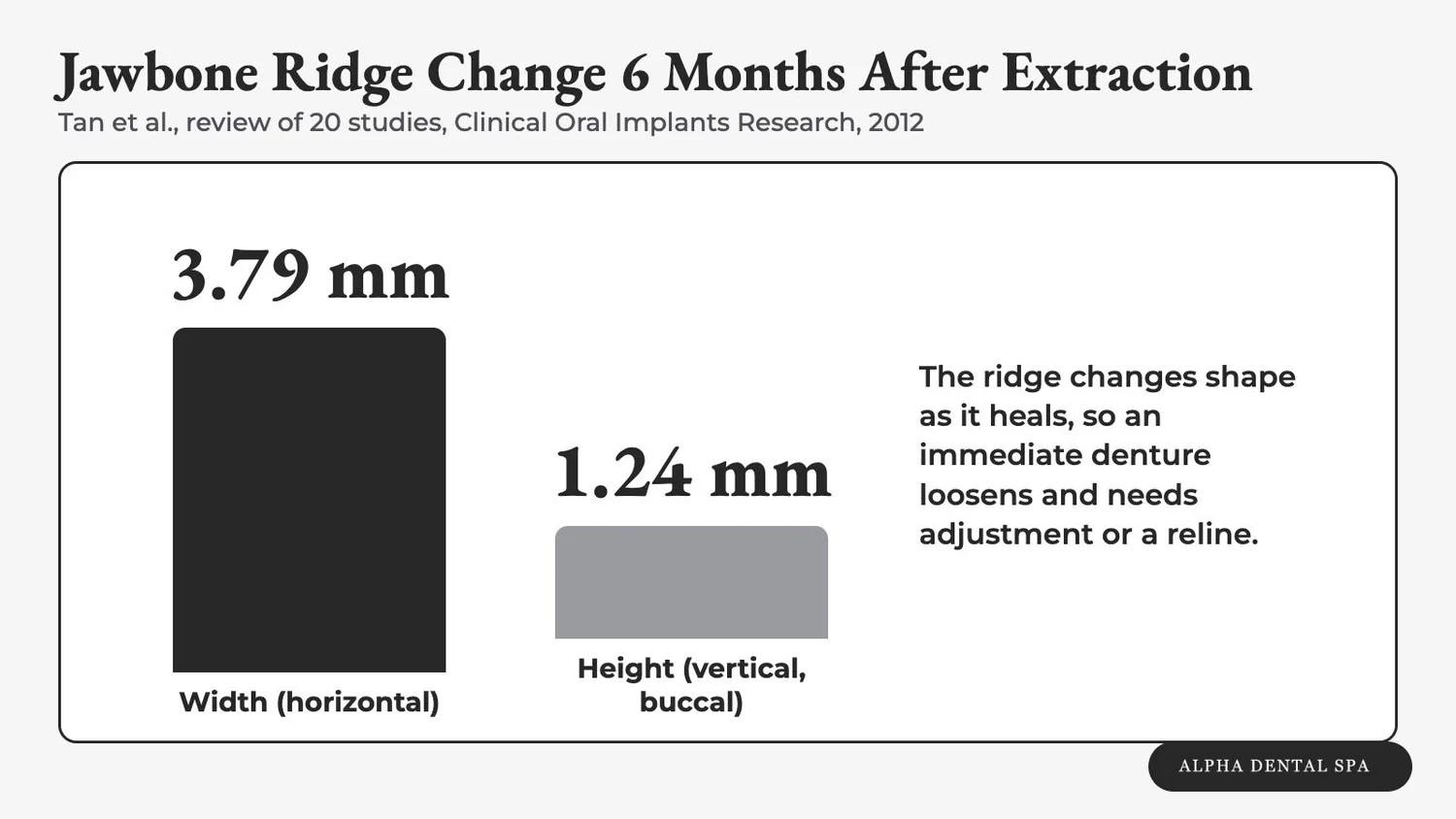
The review also reported horizontal change of 29-63% at 6-7 months. Immediate dentures after extractions therefore loosen as the ridge shrinks. Because the ridge shrinks, a denture made before extraction loosens over time. Denture adjustments for sore spots happen at follow-up visits.
Why Can't You Wear Your Dentures at Night?
Dentures come out at night because research links sleeping in them to pneumonia in adults 85 and older. The Journal of Dental Research study by Iinuma reported a hazard ratio of 2.38. Overnight wear was linked to a 2.38 hazard ratio.
The study followed 453 denture wearers, and 186 wore their dentures during sleep. The researchers observed an association and did not prove a cause. The first 24 hours after surgery are an exception when the dentist asks for continuous wear.
The ADA says to put dentures in a safe place covered in water when they are out. Daily denture cleaning also removes plaque and food particles.
What Else Should You Know About Full Mouth Extraction and Dentures?
Which Teeth Should Not Be Removed?
Teeth that should not be removed are the ones a dentist can keep to support a denture. The ADA says some teeth can be saved to preserve the jawbone and provide stability for an overdenture. The dentist decides tooth by tooth.
Do Immediate Dentures Look Fake?
Immediate dentures do not have to look fake, because the ADA says dentures can be made to closely resemble natural teeth. The ADA adds that facial muscles can sag after all teeth are lost. Dentures can fill out the appearance of the face and profile.
What Not to Do When You First Get Dentures?
What not to do when you first get dentures is skip the dentist's instructions, because early care protects the healing sockets. The list below draws on MedlinePlus and a pooled dry socket review.
- Do not remove the denture early unless the dentist says so.
- Do not drink from a straw for at least 24 hours, according to MedlinePlus.
- Do not smoke or use tobacco, since a 2022 review found dry socket in 13.2% of smokers and 3.8% of non-smokers.
- Do not eat hard or crunchy foods for 1 week, according to MedlinePlus.
- Do not skip follow-up visits where the fit is adjusted.
What Can You Wear Instead of Dentures?
Instead of a full denture, an overdenture or implants can replace lost teeth, according to the ADA. The ADA says an overdenture fits over a small number of remaining natural teeth, and implants can serve the same function. Partial dentures replace only some teeth.
Patients weighing dentures or implants can compare the signs for each choice. The ADA also describes dentures as removable appliances that replace missing teeth, and each option needs a dentist's exam first.
Missing only a few teeth points toward partial dentures instead, which keep the healthy natural teeth in place.
How Does Alpha Dental Help with Full Mouth Extraction and Dentures?
Alpha Dental helps with full mouth extraction and dentures by planning each step with Dr. Hayat, from the first measurements to the final fit. We explain the options, answer questions about healing, and schedule the follow-up visits that keep the denture comfortable.
Patients come to our Cinnaminson office for the preliminary visit, the surgery, and the adjustments that follow. Our denture services cover the full path from consultation to fitting. The same team handles the planning, the surgery day, and the denture adjustments afterward, so each stage connects to the next one.
Patients who want to plan an extraction and denture schedule can schedule a consultation with Dr. Hayat. We welcome questions at every stage, and the care team keeps each appointment calm, clear, and unhurried.
Dr. Hayat and the team at Alpha Dental Spa look forward to helping you plan your smile.