
Soft, lukewarm food after tooth extraction protects the blood clot while the socket heals. MedlinePlus advises soft foods such as yogurt, mashed potatoes, soup, avocado, and bananas, with no hard or crunchy foods for 1 week. Chewing on the opposite side and skipping straws for 24 hours keep the area calm. The socket takes 1 to 2 weeks to heal, so meals stay gentle at first.
Key Takeaways
- Soft, cool or lukewarm food is the safe choice until the wound heals, according to MedlinePlus.
- Hard and crunchy foods stay off the plate for 1 week, and nuts and seeds can lodge in the socket.
- A straw is off limits for at least 24 hours because suction can disturb the blood clot.
- A gentle salt water rinse can start after the first 24 hours in some NHS aftercare plans.
- Persistent pain, bleeding, or a bad taste means a call to the dentist.
What Is the Right Food After a Tooth Extraction?
The right food after tooth extraction is soft, easy to swallow, and not too hot. MedlinePlus lists yogurt, mashed potatoes, soup, avocado, and bananas as examples to eat until the wound heals. Soft textures let you eat without disturbing the clot that fills the socket.
Each person heals at a different pace, so a dentist or emergency dentist can adjust these steps after a complicated procedure. Each item below counts as safe food after tooth extraction under the soft-food rule from MedlinePlus and the NHS.
- Yogurt, mashed potatoes, soup, avocado, and bananas (MedlinePlus examples).
- Scrambled or soft eggs, since MedlinePlus names a large egg as a protein food.
- Tofu and cooked beans or lentils, which MedlinePlus also lists as protein foods.
- Warm, not hot, drinks, because the NHS warns against very hot drinks.
A good food after tooth extraction stays smooth, with no seeds or hard bits. Good food for after tooth extraction also avoids high heat. That rule leads straight to the reason food matters at all.
Why Does Food Matter After a Tooth Extraction?
Food matters after a tooth extraction because the wrong texture can disturb the blood clot that protects the socket. According to MedlinePlus, the clot fills the socket as the bone grows back. A lost clot exposes the socket and causes pain.
The Dentistry Journal systematic review (2022) describes dry socket as partial or total loss of the post-extraction blood clot. Severe pain from dry socket usually starts one to five days after the procedure. Gentle food keeps pressure and debris away from the clot during that window.
Chewing technique matters as much as the menu. MedlinePlus says to chew on the other side of the mouth. The same guidance says to avoid the area near the socket for at least 3 days. MedlinePlus also says to avoid touching the socket with the tongue.
A guide to gum healing time shows how long the socket needs protection. The next question is how long gentle eating lasts.
When Can You Eat After a Tooth Extraction?
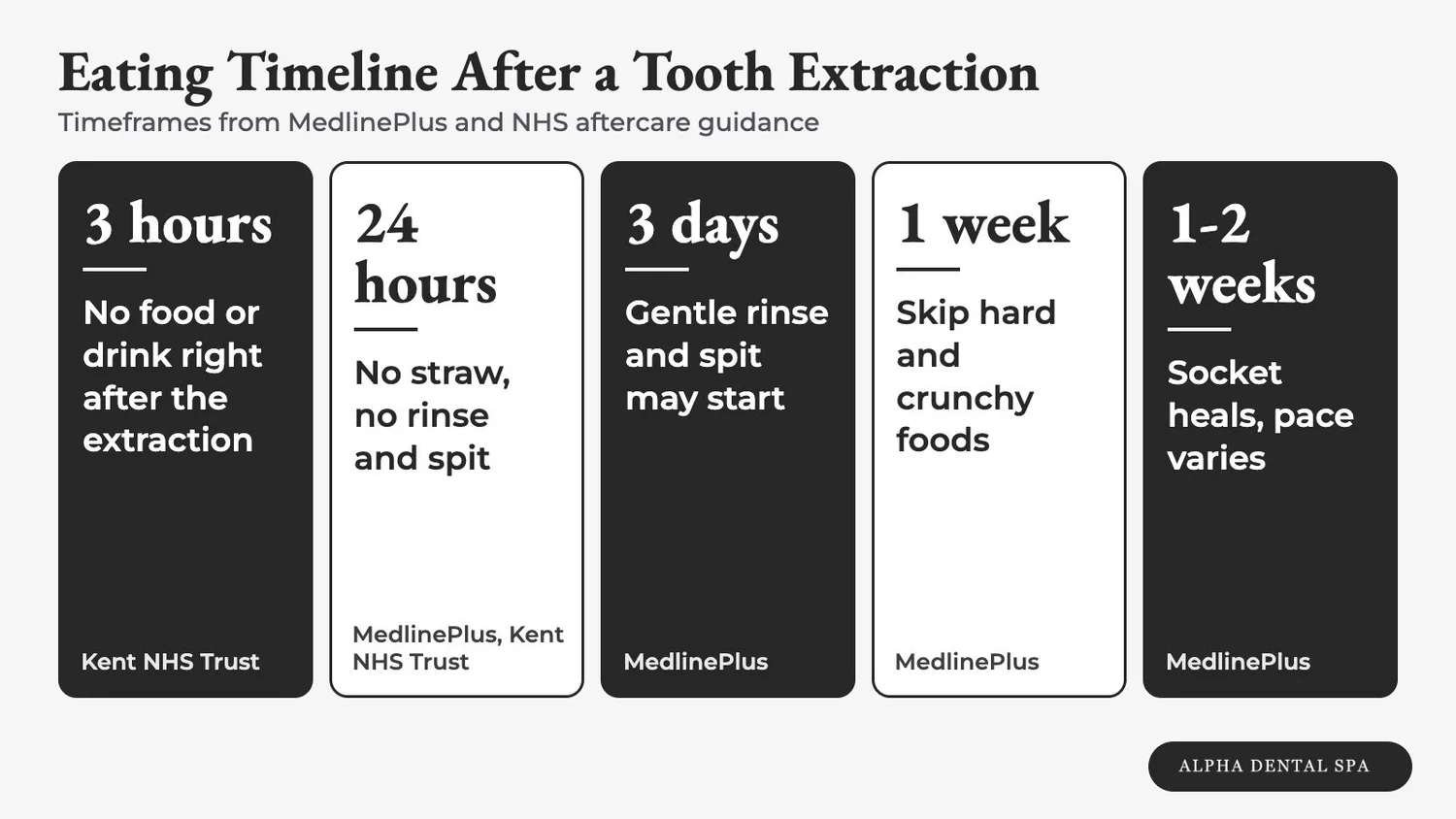
You can eat after a tooth extraction about 3 hours after the procedure, starting with soft food. The Kent Community Health NHS Foundation Trust advises no food or drink for three hours and soft food afterward. Hard and crunchy foods wait 1 week, per MedlinePlus.
The table below compares the timeframes that MedlinePlus, the NHS, and the Kent trust give for the first two weeks.
| Time After Extraction | What Changes | Source |
|---|---|---|
| First 3 hours | No food or drink | Kent NHS Trust |
| First 24 hours | No straw, no rinse and spit | MedlinePlus, Kent NHS Trust |
| 1 to 2 days | Pain and swelling usually start to improve | NHS |
| About 3 days | Rinse and spit may begin | MedlinePlus |
| 1 week | Hard and crunchy foods stay off the menu | MedlinePlus |
| 1 to 2 weeks | Socket heals at a personal pace | MedlinePlus |
The graphic below shows the same eating timeline in five steps.
Healing speed varies, so the dates above are ranges. A day 2 healing check shows what normal looks like early on.
How Do You Start Eating Food After a Tooth Extraction?
Start eating food after a tooth extraction by waiting for the numbness to fade. Then choose small spoonfuls of soft food. Eat slowly on the opposite side of the extraction site, as MedlinePlus advises. The steps below turn that guidance into a routine.
- Wait 3 hours after the extraction before any food or drink, per the Kent NHS Trust.
- Choose a soft food such as yogurt, mashed potatoes, or soup that is not too hot.
- Take small bites and chew on the other side of the mouth.
- Skip the straw for at least 24 hours, as MedlinePlus advises.
- Add softer cooked foods as chewing becomes comfortable, per the NHS.
- Keep hard and crunchy foods off the plate for 1 week.
Eating food after tooth extraction gets easier each day, but the avoid list stays in place for a full week.
What Food to Avoid After Tooth Extraction?
The food to avoid after tooth extraction is anything hard, crunchy, or small enough to lodge in the socket. MedlinePlus says to avoid hard and crunchy foods for 1 week. The NHS names nuts and seeds as food that could get stuck in the wound.
The NHS also lists alcohol and very hot drinks as items to skip. The NHS ties both to the risk of bleeding or scalding.
The table below sorts common foods into eat and avoid groups using the MedlinePlus and NHS wording.
| Food or Drink | Eat or Avoid | Reason | Source |
|---|---|---|---|
| Yogurt, soup, mashed potatoes | Eat | Soft until the wound heals | MedlinePlus |
| Avocado, bananas | Eat | Soft until the wound heals | MedlinePlus |
| Chips, hard candy, crusts | Avoid | Hard or crunchy for 1 week | MedlinePlus |
| Nuts and seeds | Avoid | Can get stuck in the wound | NHS |
| Alcohol | Avoid | Bleeding or scalding risk | NHS |
| Very hot drinks | Avoid | Bleeding and scalding risk | NHS |
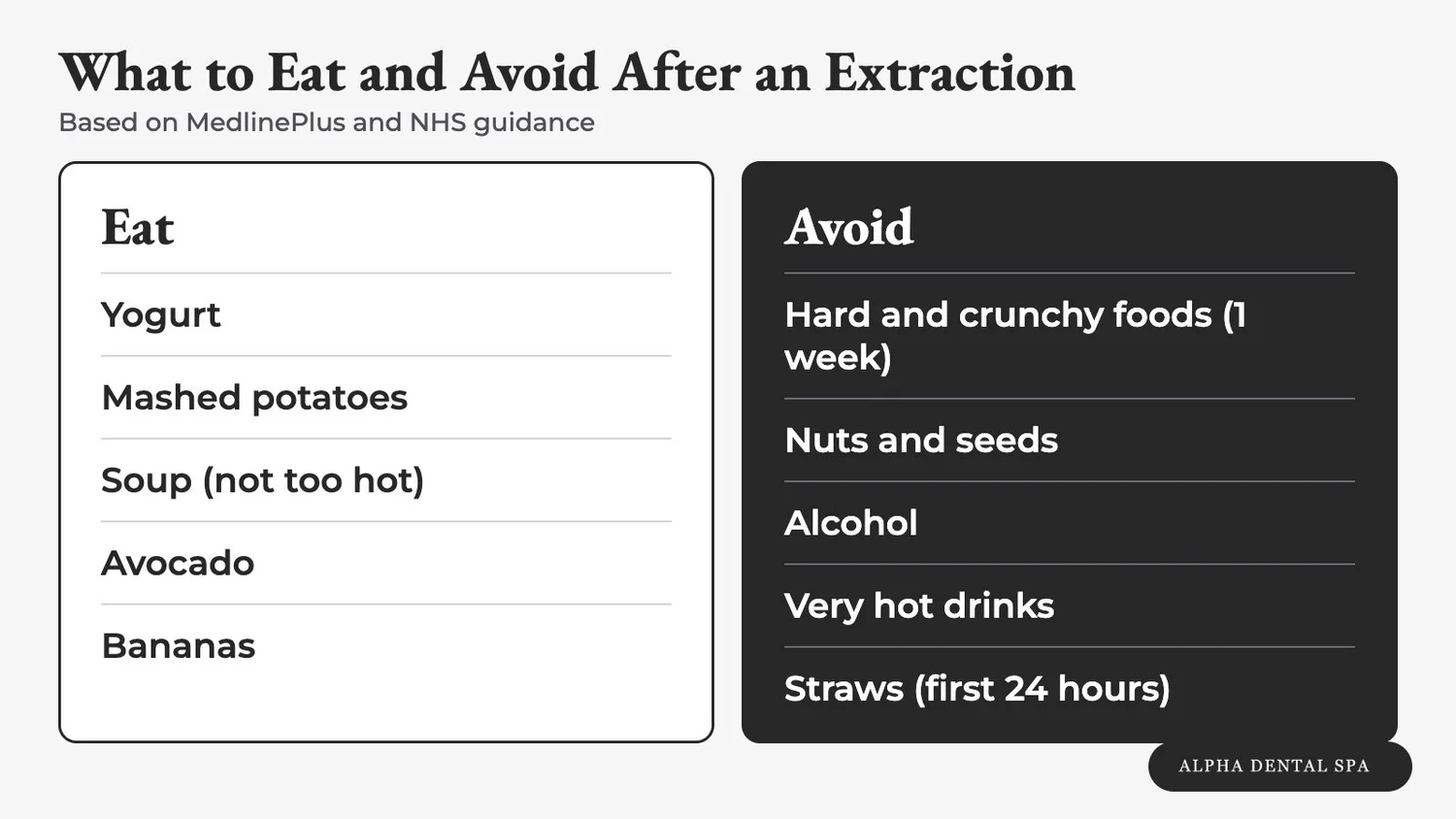
The infographic below repeats the eat and avoid lists side by side.
A tooth that still aches changes the menu too, and a post on toothache food covers that case.
Can You Use a Straw After a Tooth Extraction?
No, you cannot use a straw after a tooth extraction for at least 24 hours. MedlinePlus says suction can disturb the blood clot in the socket, causing bleeding and pain. Sip from a cup or spoon instead.
That same suction rule explains why milkshakes and smoothies need a spoon at first.
Can You Drink Alcohol or Hot Drinks After a Tooth Extraction?
No, alcohol and very hot drinks are not advised after a tooth extraction. The NHS says to skip alcohol and very hot drinks to reduce the risk of bleeding or scalding. The Kent NHS Trust adds that hot drinks should not be too hot.
Can You Eat Fast Food After a Tooth Extraction?
Yes, you can eat fast food after tooth extraction when the item is soft, not too hot, and free of seeds. The MedlinePlus soft-food rule applies to every menu. Mashed potatoes, soup, or plain yogurt fit, while seeded buns and fries do not.
The NHS names seeds and crunchy food as items to skip, which rules out crispy coatings and seeded bread. Fast food after tooth extraction also needs a look at salt and sugar. The FDA lists the sodium Daily Value as less than 2,300 mg per day.
The FDA also says Americans average about 3,400 mg of sodium per day. The FDA says the Dietary Guidelines for Americans recommend added sugars below 10 percent of calories. That equals 50 grams on a 2,000 calorie diet. A soft, simple choice keeps both numbers in check while the mouth heals.
Fast food is one concern, and food lodged in the socket is the next.
What Should You Do About Food in the Hole After Tooth Extraction?
Dealing with food in hole after tooth extraction takes patience and a gentle rinse, not poking. MedlinePlus says to avoid touching the socket with the tongue for at least 3 days. A gentle salt water rinse after the first 24 hours is an NHS step.
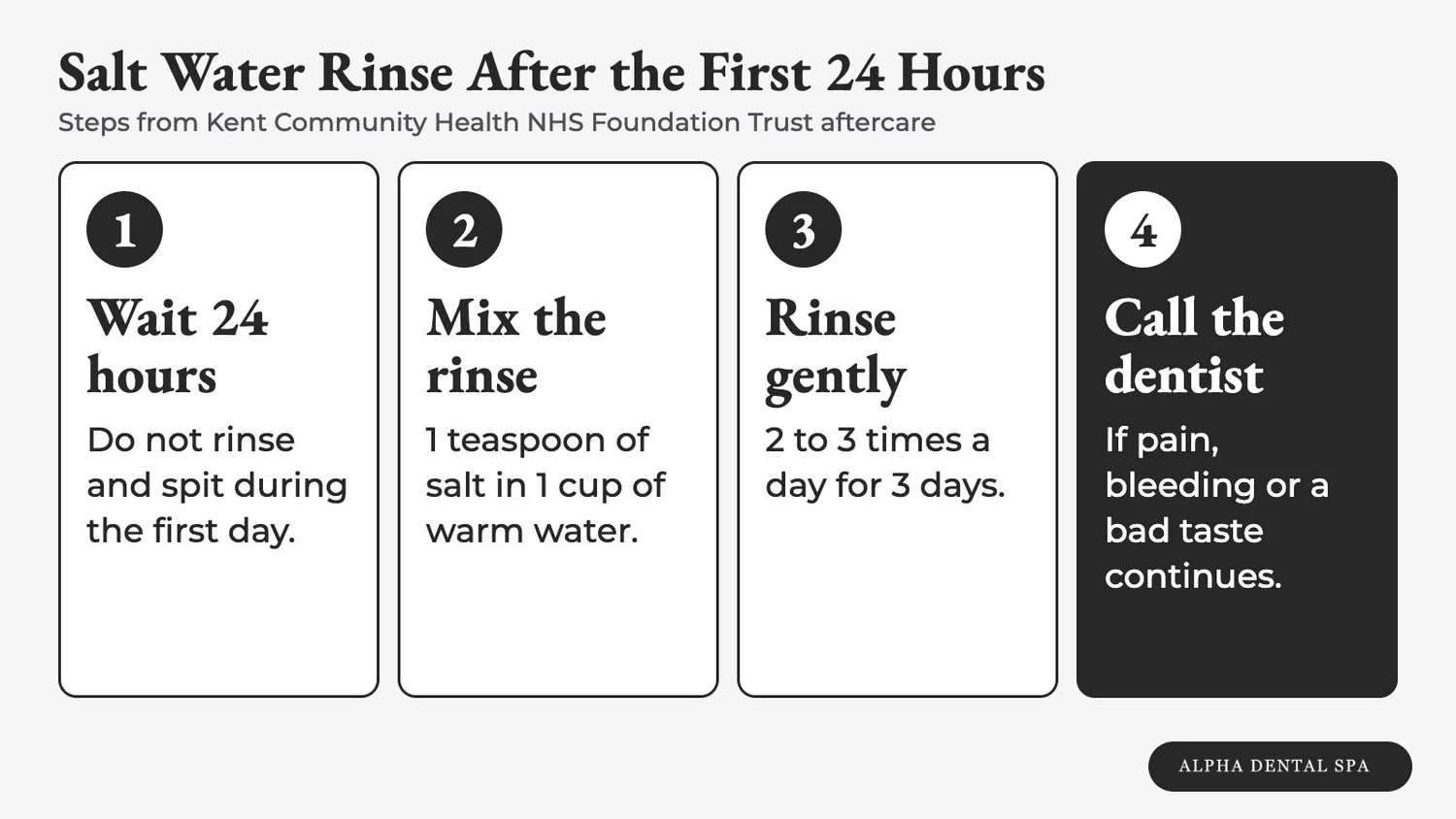
The Kent NHS Trust gives a recipe of 1 teaspoon of salt in 1 cup of warm water. Rinse gently 2 to 3 times a day for 3 days, starting 24 hours after the extraction. MedlinePlus says rinse and spit may start about 3 days after surgery, so timing differs between providers.
The infographic below shows the four steps for a salt water rinse.
MedlinePlus adds that a dentist may ask for a gentle syringe wash with water and salt. Signs such as a bad taste with pain or fever match the infection signs that need prompt attention.
The NHS advises an urgent dental visit for bleeding that does not stop. The same advice covers severe or worsening pain and swelling, and pain with a bad taste, high temperature, or feeling unwell. A patient who sees these signs can reach emergency dental care without waiting.
What Mouth Rinse Is Safe After a Tooth Extraction?
A safe mouth rinse after a tooth extraction is plain warm salt water or a mild mouthwash used gently. The NHS says to keep the wound clean by rinsing gently with mouthwash or warm salt water. Forceful swishing is not part of that advice.
Timing matters more than the product. The Kent NHS Trust says not to rinse and spit for 24 hours. MedlinePlus says rinse and spit may start about 3 days after surgery.
A dentist can name the exact day for your case. The written instructions from your dental office always come first.
How Does Smoking Affect Healing After a Tooth Extraction?
Smoking raises dry socket rates after a tooth extraction. The 2022 Dentistry Journal systematic review found 13.2% pooled prevalence in smokers against 3.8% in non-smokers. The review pooled 11 studies of different teeth and age groups, so the authors call the link an estimate.
MedlinePlus says not to smoke or use tobacco after an extraction. The Kent NHS Trust advises no smoking for 24 to 48 hours. The NHS adds that smoking can increase the risk of infection. A closer look at smoking after extraction covers timing in more detail.
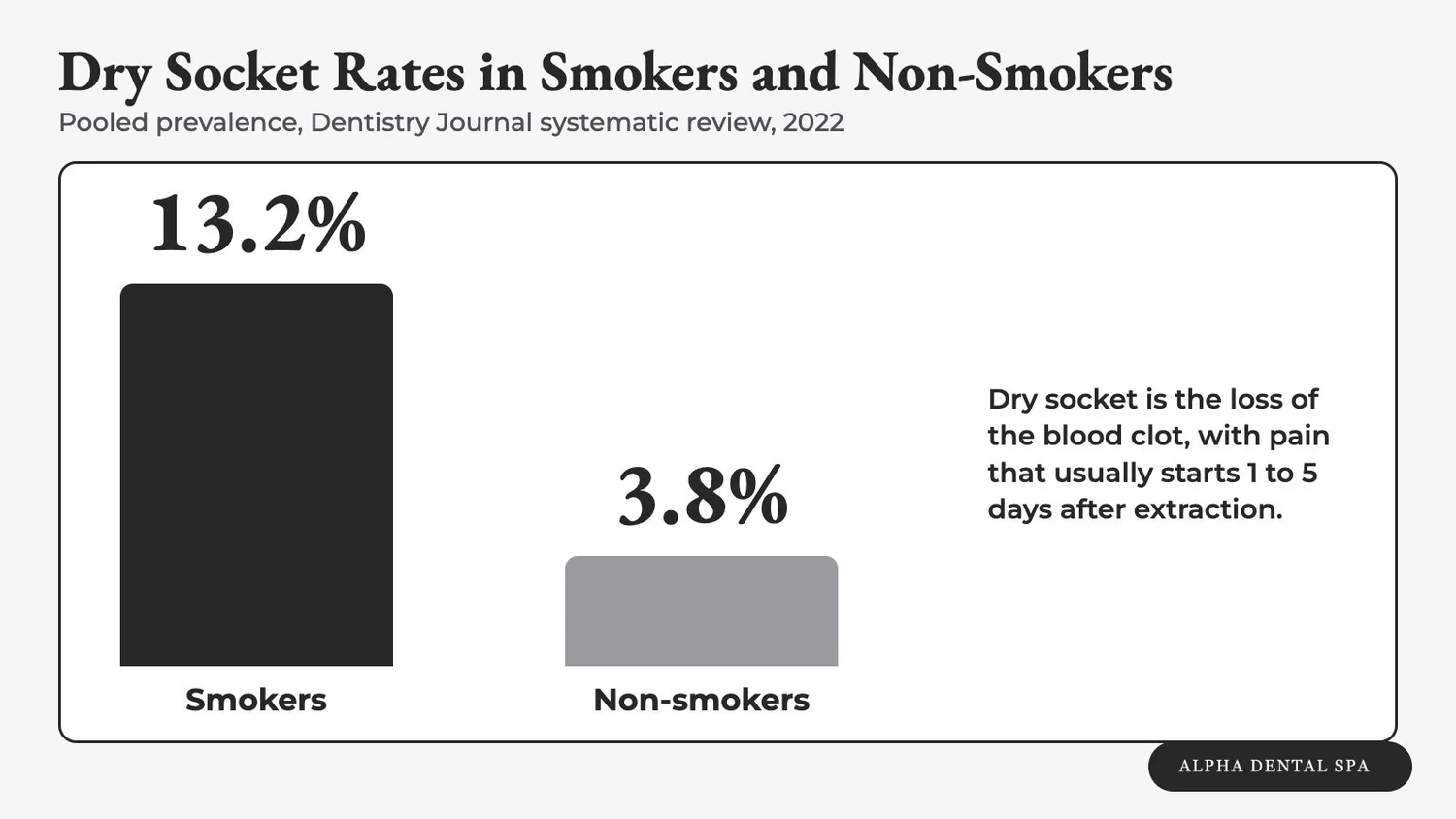
The chart above shows the two pooled rates. Both numbers describe dry socket, the loss of the protective clot. The review links dry socket to severe pain one to five days after surgery.
What Else Should You Know About Food After a Tooth Extraction?
Do You Need Antibiotics After a Tooth Extraction?
Antibiotics after a tooth extraction are a decision for your dentist, not a diet choice. MedlinePlus says to take any antibiotics or other medicines as prescribed. Food does not replace or change that plan. A separate post on antibiotics after extraction explains when they are used.
Does Protein Help After a Tooth Extraction?
Protein helps the body repair cells, which makes soft protein foods useful after a tooth extraction. MedlinePlus says protein is needed to repair cells and make new ones. Examples include eggs, tofu, and cooked beans. Healthy adults need 10% to 35% of calories from protein.
Can You Eat Normally After the Socket Heals?
Yes, normal eating returns as the socket heals, which MedlinePlus puts at 1 to 2 weeks. Add firmer foods slowly as chewing becomes comfortable, as the NHS describes. Everyone heals at a different rate, so follow your dentist's go-ahead.
How Painful Is Recovery After a Tooth Extraction?
Pain and swelling usually start to improve after 1 or 2 days, according to the NHS. Some discomfort can last up to 2 weeks. A look at wisdom tooth pain sets expectations for the hardest teeth. Continued pain several hours after the procedure needs a call to the dentist, per MedlinePlus.
How Does Alpha Dental Help With Healing After an Extraction?
Alpha Dental helps with healing after an extraction by giving clear aftercare instructions and checking the site when something feels wrong. Dr. Hayat and our team in Cinnaminson explain which foods to choose and which to skip for your case.
We welcome questions about eating, rinsing, and pain control at every visit. Our team can check the socket when pain or bleeding continues. Patients can request an appointment for that check.
Our general and restorative dental services also cover the care that follows an extraction.
We encourage every patient to keep a written copy of aftercare steps. Calls about food, rinsing, or pain are always welcome, and the dentist's instructions come first.
Healing questions are always welcome at Alpha Dental.