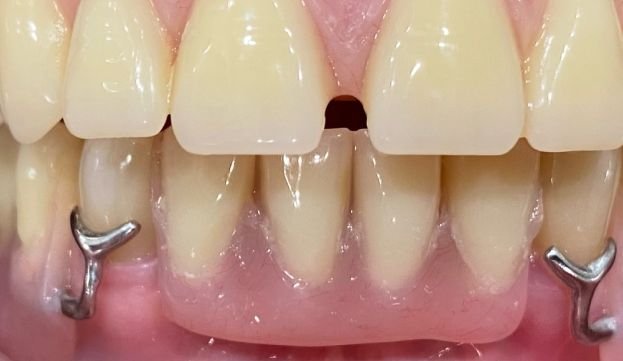
Dentures are removable dental appliances made to replace missing teeth and the surrounding gum tissue. They restore your ability to chew food, speak clearly, and smile with confidence. According to the American College of Prosthodontists, 178 million Americans are missing at least one tooth, and roughly 36 million have lost all of their teeth. At our Cinnaminson, NJ office, we see patients every week who are exploring dentures as a way to get their daily life back on track.
This article covers the different types of dentures, how the process works from start to finish, who makes a good candidate, how to care for them, and how they compare to other tooth replacement options like dental implants and bridges.
What Are Dentures and How Do They Work?
Dentures are custom-made prosthetics that sit on top of your gums and replace some or all of your missing teeth. A full denture replaces an entire arch of teeth, either upper or lower. A partial denture fills in the gaps when you still have some natural teeth remaining. Both types are removable, which means you take them out for cleaning and while you sleep.
Full upper dentures rely on suction against the roof of your mouth, also called the palate, to stay in place. Lower dentures rest on the gum ridge shaped like a horseshoe, leaving room for the tongue. Partial dentures use clasps or a metal framework that attaches to your existing teeth for support. In some cases, a denture adhesive provides extra grip throughout the day.
The teeth on a denture are typically made from acrylic resin or porcelain. The base is a gum-colored acrylic material shaped to match the contours of your mouth. According to the American Dental Association, more than 36 million Americans are completely edentulous, and 120 million are missing at least one tooth. About 90% of people who have lost all their teeth wear dentures, according to the American College of Prosthodontists.
Residents of Cinnaminson and Burlington County who are dealing with missing teeth can visit our office for a full evaluation. We create partial and complete dentures that are designed for comfort, durability, and a natural appearance.
Types of Dentures
Complete Dentures
Complete dentures replace every tooth in the upper jaw, lower jaw, or both. They are the most common option for patients who have no remaining natural teeth. A conventional complete denture is placed after the gums have fully healed following extractions, which usually takes 8 to 12 weeks. During this healing window, bone and tissue reshape as they recover.
Immediate Dentures
Immediate dentures are made in advance and placed right after tooth extraction. The benefit is that you never go without teeth during the healing period. The drawback is that gums and bone shrink as they heal, so immediate dentures need more adjustments and are typically considered a temporary solution until conventional dentures can be fabricated.
Partial Dentures
Partial dentures are used when you still have some healthy natural teeth. They consist of replacement teeth attached to a gum-colored base, often connected by a metal framework that clips onto your existing teeth. Partial dentures fill in gaps, restore chewing ability, and prevent surrounding teeth from shifting out of position over time.
At our practice in Cinnaminson, we offer both partial and complete denture options and walk every patient through which type fits their situation best.
How the Denture Process Works Step by Step
Getting dentures is not a single appointment. It is a process that involves several visits to get the fit, look, and function right.
The first step is an exam. We evaluate your remaining teeth, gums, and jawbone to decide whether full or partial dentures are the right fit. If teeth need to be removed first, we schedule extractions and allow time for healing.
Next, we take detailed impressions of your mouth. These molds capture the exact shape of your gum ridges and palate. Bite measurements are also recorded so the denture teeth line up correctly when your jaw closes.
A trial version of the denture, often called a wax try-in, is created so we can check the fit, color, and shape before the final version is made. Adjustments happen at this stage to get the appearance and bite as close to natural as possible.
The final denture is then fabricated in a dental lab and delivered to you at a follow-up appointment. Most patients need at least one or two more visits after delivery for minor adjustments. According to the Cleveland Clinic, it can take a few weeks for your mouth to fully adjust to wearing new dentures.
Who Is a Good Candidate for Dentures?
A good candidate for dentures is anyone who has lost several or all of their teeth and wants to restore normal eating, speaking, and facial appearance. The CDC reports that 26% of adults aged 65 and older have 8 or fewer remaining teeth, and more than 15% of adults in that age group have lost all of their teeth. Tooth loss is not limited to seniors. The National Institute of Dental and Craniofacial Research found that 1.6% of adults aged 35 to 49 and 5.6% of adults aged 50 to 64 had no remaining natural teeth.
You may be a strong candidate for dentures if you have multiple missing teeth, difficulty eating or speaking, loose or shifting teeth, or bone loss that makes dental implants difficult. We also see patients in the Cinnaminson and Moorestown area who choose dentures because they want a non-surgical, affordable option for replacing teeth.
Patients who are unsure whether dentures or another restoration is the better choice can contact our office to schedule a consultation.
How Long Should You Wear Dentures Per Day?
How long you should wear dentures per day depends on where you are in the adjustment process. During the first few days with new dentures, your dentist may ask you to wear them most of the time, including while sleeping. This helps identify areas that need adjustment quickly.
Once the initial adjustments are made, you should remove your dentures before bed every night. This gives your gum tissue time to rest and recover. Wearing dentures around the clock puts constant pressure on the gums and underlying bone. A study published in the Journal of Dental Research found that constant pressure on the jawbone can accelerate bone resorption over time.
You should also remove your dentures for cleaning at least once a day. Plaque and bacteria build up on dentures just like they do on natural teeth. Soaking them overnight in a denture-cleaning solution or plain water keeps them moist and prevents warping. The American Dental Association recommends daily brushing of dentures with a soft brush and non-abrasive denture cleanser.
Benefits of Wearing Dentures
Dentures offer several real, measurable benefits for people who have experienced tooth loss.
The most immediate benefit is the ability to eat a wider range of foods. Severe tooth loss, defined by the CDC as having 8 or fewer teeth, directly impacts the ability to eat meats, fruits, and vegetables. Dentures restore chewing function and help patients maintain a healthier diet.
Dentures also support the structure of your face. When teeth are missing, the cheeks and lips lose support and can collapse inward, creating a sunken, aged appearance. Dentures fill out the facial profile and provide a more youthful look.
Speaking clearly becomes easier with dentures. Missing front teeth especially affect pronunciation. Dentures restore proper tongue placement and airflow for clearer speech.
For many patients in South Jersey, dentures are also the most affordable tooth replacement option available. They require no surgery, and most PPO dental insurance plans cover some or all of the cost. At our office, we also accept most major PPO insurance plans and offer CareCredit financing for patients who need flexible payment options.
Dentures vs. Dental Implants vs. Bridges
Choosing the right tooth replacement depends on how many teeth you are missing, the health of your jawbone, your budget, and your personal preferences. Here is how the three main options compare.
Feature
Dentures
Dental Implants
Dental Bridges
How they attach
Rest on gums; held by suction, clasps, or adhesive
Titanium post fused to jawbone
Cemented to adjacent natural teeth
Surgery required
No
Yes
No
Removable
Yes
No (permanent)
No (permanent)
Prevents bone loss
No
Yes
No
Average lifespan
5 to 10 years (ADA)
15+ years to lifetime
5 to 15 years
Best for
Multiple or all missing teeth
One or more missing teeth with adequate bone
1 to 3 missing teeth in a row
Sources: American Dental Association, American College of Prosthodontists, Cleveland Clinic
Dental implants are the only option that stimulates the jawbone and prevents bone resorption. However, not every patient qualifies for implants, especially those with significant bone loss. Dentures remain the most practical choice for patients missing most or all of their teeth. Bridges work best when only a few teeth in a row are missing and the surrounding teeth are strong enough to support the restoration.
We offer implants, crowns, bridges, and dentures at our Cinnaminson office. During your consultation, we help you weigh the pros and cons of each option based on your specific oral health.
How to Care for Your Dentures
Proper denture care extends their lifespan and protects your oral health. The American Dental Association recommends that dentures be evaluated for possible replacement every 5 to 7 years, since natural changes in bone and gum tissue affect the fit over time.
Remove and rinse your dentures after eating to clear food particles. Brush them daily with a soft-bristled brush and a non-abrasive denture cleanser. Regular toothpaste is too harsh and can scratch the surface. Soak dentures overnight in water or a denture-cleaning solution to keep them moist and prevent warping.
Clean your gums, tongue, and any remaining natural teeth every morning before putting your dentures back in. This improves circulation in the gum tissue and removes plaque. If you have remaining natural teeth, brushing twice a day with fluoride toothpaste is critical for preventing further decay and gum disease.
Schedule regular dental checkups even if you wear full dentures. Your dentist can spot early signs of irritation, infection, or bone changes and reline your dentures before problems get worse. Patients throughout Cinnaminson and neighboring areas like Moorestown depend on regular visits to our practice to keep their dentures in good shape.
Frequently Asked Questions
Is a Denture Painful?
A denture is not painful once it is properly fitted and adjusted. It is normal to feel some soreness and irritation during the first few weeks as your mouth adapts to the new appliance. Minor sore spots are common and can be resolved with quick adjustments at your dentist's office. If pain persists or worsens, it usually means the denture needs a reline or modification. Patients at our Cinnaminson office can come in for adjustments anytime discomfort arises.
What Foods Should I Avoid With Dentures?
The foods you should avoid with dentures include hard, sticky, and very crunchy items. Caramel, taffy, whole nuts, popcorn kernels, hard candy, and raw carrots can dislodge or damage dentures. Start with soft foods like mashed potatoes, yogurt, and scrambled eggs when you first get your dentures. Over time, you can gradually reintroduce firmer foods by cutting them into small pieces and chewing evenly on both sides.
Can I Sleep With Dentures In?
You can sleep with dentures in during the first few days if your dentist advises it, but you should not make it a habit. Removing dentures at night gives your gums a chance to rest and helps prevent fungal infections like denture stomatitis. According to the American Dental Association, placing dentures in water or a denture cleanser solution overnight keeps them from drying out and losing their shape.
What Are the Disadvantages of Dentures?
The disadvantages of dentures include an adjustment period, potential slipping during eating or speaking, and gradual bone loss in the jaw over time. Because dentures rest on the gums rather than anchoring into the jawbone, they do not stimulate bone the way natural tooth roots or dental implants do. Research shows that patients can lose 25% or more of their jawbone width in the first year after extractions. This is why regular checkups and relines are important to maintain a good fit.
Can a Dentist Pull All Your Teeth at Once for Dentures?
A dentist can pull all your teeth at once for dentures, but whether this is recommended depends on your overall health, the number of teeth being removed, and how complex the extractions are. In many cases, teeth are removed in stages to reduce stress on the body and allow for better healing. If all teeth are removed at once, immediate dentures can be placed the same day so you are never without teeth. We evaluate each patient individually at our Cinnaminson office to determine the safest approach.
Can I Have All My Teeth Removed and Replaced With Dentures?
Yes, you can have all your teeth removed and replaced with dentures. This is a common procedure for patients whose remaining teeth are severely decayed, infected, or causing chronic pain. A study published in the Journal of the American Dental Association found that the prevalence of complete edentulism among adults 65 and older declined from 16.36% in 2012 to 13.54% in 2020, partly because of improvements in preventive care. For patients where saving natural teeth is no longer realistic, complete dentures restore function, appearance, and quality of life.
What Are Fake Teeth for Missing Teeth?
Fake teeth for missing teeth are dental prosthetics designed to replace one or more lost teeth. The most common options include dentures, dental implants, and bridges. Dentures are removable and can replace several teeth or an entire arch. Implants are permanent titanium posts placed in the jawbone with a crown on top. Bridges are fixed restorations cemented to the teeth on either side of the gap. Your dentist will recommend the best option based on how many teeth are missing and the condition of your jawbone and remaining teeth.
Your Next Step
Missing teeth affect more than your smile. They change the way you eat, speak, and feel about yourself. The American College of Prosthodontists estimates that nearly 41 million Americans wear dentures, and for most of them, dentures have been the key to getting daily life back to normal.
At Alpha Dental in Cinnaminson, NJ, we have been helping patients restore their smiles for over 30 years. Whether you need a full set of dentures, a partial to fill in gaps, or you are comparing dentures to other options like implants or bridges, we are here to walk you through every step.
If you are in Cinnaminson, Moorestown, or anywhere in Burlington County and you are ready to explore your options, give us a call at (856) 829-1989 or contact us online to schedule your consultation. We accept most PPO insurance plans and offer CareCredit financing to make treatment accessible.