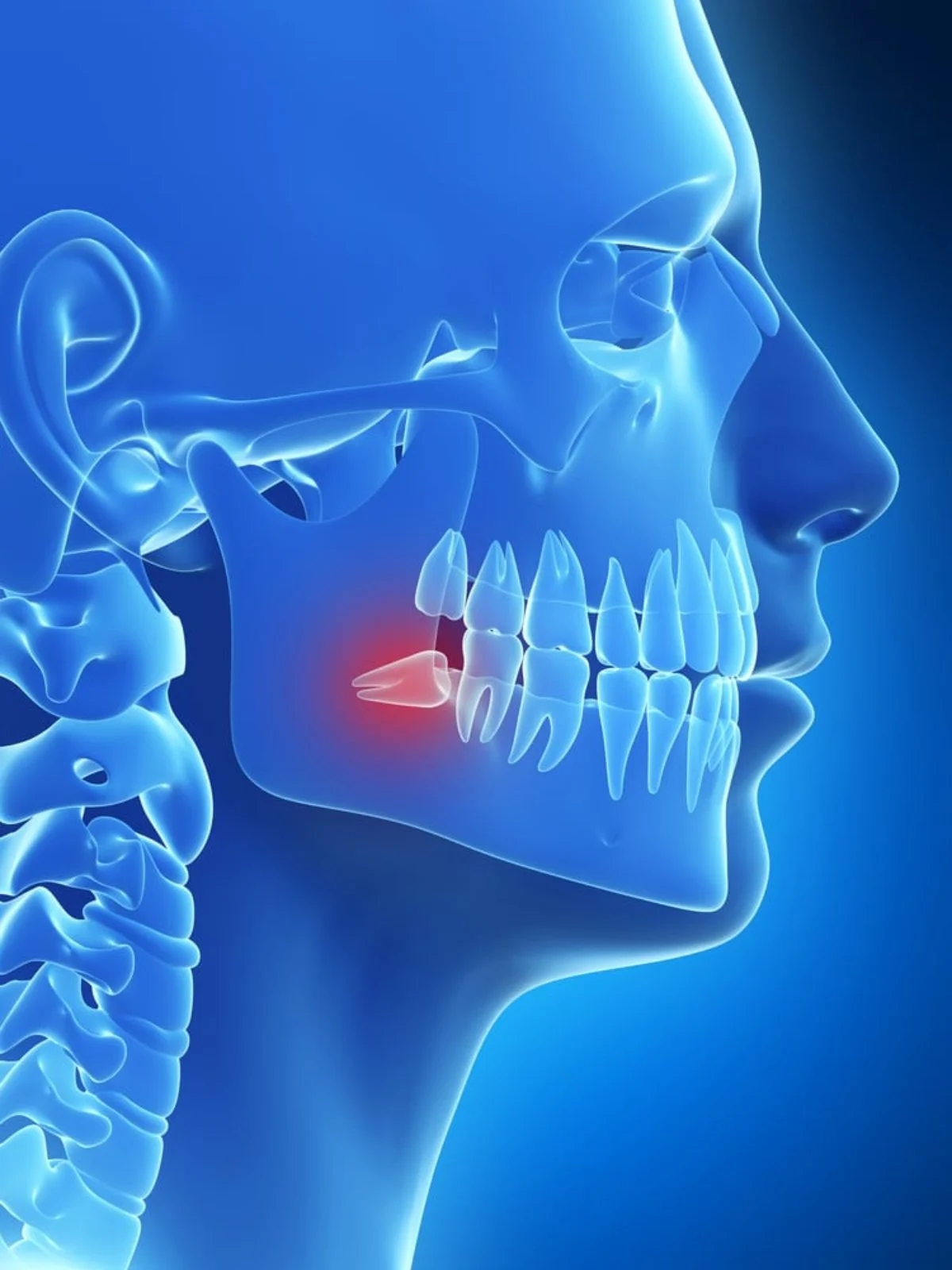
Wisdom tooth extraction is not painful during the procedure, because local anesthesia blocks the nerves around the tooth completely. What you feel instead is firm pressure, movement, and a few odd sounds. The real soreness arrives later, once the numbness fades, and published pain studies show it peaks about 6 to 12 hours after surgery before easing day by day. Below we walk through what the procedure feels like, what the anesthesia and sedation choices change, how the pain scores on a 1 to 10 scale, what each recovery day brings, and the few warning signs that mean you should call us.
How Painful Is Wisdom Tooth Extraction?
Wisdom tooth extraction is painless during the procedure and moderately sore for two to three days afterward. Splitting the answer into those two phases matters, because almost every fear people carry is about the wrong phase. The procedure phase is controlled by anesthesia. The recovery phase is controlled by inflammation, and inflammation follows a schedule you can plan around.
Inflammation after third molar surgery has been measured carefully. A 2025 randomized trial published in Scientific Reports reported that pain after impacted third molar surgery peaks within 6 to 12 hours of the procedure. Pain management literature from Malamed places the sharpest discomfort 5 to 6 hours after the appointment ends, reaching its highest point during the first postoperative day. Both findings point at the same window, which is the evening of surgery and the following morning.
Wisdom teeth come out this often because they rarely have room. Third molars erupt between ages 17 and 25, and American Association of Oral and Maxillofacial Surgeons figures put the national volume near 10 million third molars removed each year from roughly 5 million patients. Those same figures show third molar extractions account for more than 92% of all teeth removed in patients under 40. Crowding, partial eruption, decay in spots a toothbrush cannot reach, and repeated gum infections are the usual reasons a wisdom tooth gets scheduled for removal.
Does Wisdom Tooth Extraction Hurt During the Procedure?
Wisdom tooth extraction does not hurt during the procedure, because local anesthetic numbs the tooth, the socket, and the surrounding gum tissue before any instrument touches the area. Numbness is tested before we begin, and more anesthetic is added if any sensation remains. Sharp pain during the appointment is a sign the area needs more anesthetic, not a normal part of the experience.
Anesthetic blocks pain fibers, and it leaves pressure fibers working. Pressure is what patients actually report: a firm push, a rocking motion, and sometimes a snap or crackle as the tooth separates from the bone. Those sounds travel through the jaw straight to the ear, which makes them louder to you than to anyone else in the room. The sensation is strange rather than painful, and it lasts only as long as the tooth takes to lift free.
The appointment itself is usually short. A fully erupted upper wisdom tooth often takes a few minutes. A lower tooth sitting under bone takes longer, since the gum is opened, a small amount of bone is removed, and the tooth may be divided into sections to come out cleanly. More surgical time does not mean more pain during the visit, because the anesthetic holds for the full procedure and well past it.
What Kind of Anesthesia Is Used for Wisdom Tooth Extraction?
The anesthesia used for wisdom tooth extraction is a local anesthetic injected near the tooth, used alone or paired with a sedation option that reduces awareness and anxiety. The two do different jobs, and separating them clears up most of the confusion people bring to the consultation. Local anesthetic removes sensation. Sedation removes the stress of being present for it.
Sedation options in dentistry run on a scale. Nitrous oxide, the inhaled gas, produces a light floating calm and wears off within minutes of the mask coming off. Oral sedation uses a prescribed pill taken before the appointment and leaves most patients drowsy and relaxed, with patchy memory of the visit. Intravenous sedation goes deeper, is delivered by a provider trained and licensed for it, and usually leaves no memory of the procedure at all. Availability varies by office, so the practical step is asking which options a given practice provides before the day of surgery.
Choosing among them depends on the tooth and on you. Depth of impaction, how close the roots sit to the nerve canal, how many teeth are coming out in one visit, and your own comfort level all feed the decision. We review X-rays at the planning visit and talk the options through the same way we do for any other general dentistry procedure, so nothing about the appointment is a surprise.
Is Sedation Necessary for Wisdom Tooth Extraction?
Sedation is not necessary for wisdom tooth extraction in most cases, because local anesthetic alone blocks the pain completely. Millions of wisdom teeth come out every year under local anesthetic with nothing added, and those patients feel the same pressure and hear the same sounds as everyone else. Sedation treats anxiety and complexity, not pain.
Complexity raises the case for it. Deeply impacted lower teeth, roots curved around the nerve canal, and plans to remove all four in a single sitting all make a longer appointment, and a longer appointment is easier to sit through when you are sedated. Strong dental anxiety and a sensitive gag reflex are the other two reasons patients choose it. Pain control is identical either way, since the anesthetic does that part of the work regardless.
Cost, recovery time, and logistics pull the other direction. Sedation requires fasting beforehand, an adult to drive you home, and a quiet day afterward, while a straightforward extraction under local anesthetic lets many people drive themselves and return to light activity the same afternoon. Dr. Cho reviews both paths with patients and picks the one that matches the tooth and the person in front of him.
Does an Impacted Wisdom Tooth Hurt More to Remove?
An impacted wisdom tooth hurts more to recover from than an erupted one, though the extraction itself stays painless under anesthetic. Impaction changes the surgery, and the surgery changes the recovery. More tissue work produces more inflammation, and inflammation is what you feel for the next several days.
A simple extraction removes a tooth that has already broken through the gum. The dentist loosens the tooth within its socket and lifts it out, and the only wound is the socket itself. A surgical extraction reaches a tooth still trapped under gum or bone. That means a small gum flap, a conservative amount of bone removal, often sectioning the tooth, and stitches to close the site. Each of those steps adds to the healing load the body carries afterward.
The difference shows up most clearly in complication rates. Published incidence reviews put dry socket at 1% to 4% after routine extractions and 5% to 30% after impacted lower third molars, a gap driven almost entirely by surgical difficulty. A nationwide cohort study in PLOS ONE found an overall complication rate of 4.2% after impacted lower third molar removal, meaning more than 95% of these surgeries finish with nothing but ordinary healing. Lower impacted teeth consistently run sorer than upper ones, since the lower jaw is denser bone with less blood flow.
Bone density also explains why a flaring lower wisdom tooth tends to land people in emergency dental care before removal is ever scheduled. Infection around a partly erupted lower molar builds quickly in tight tissue, and the swelling that follows often arrives overnight.
Knowing which type you are facing is worth asking about in advance. The X-ray shows it immediately, and the answer shapes how much time off you plan. Patients weighing removal against saving a tooth get the same X-ray review, since the decision rests on what the images show rather than on how the tooth feels that week.
How Painful Is Wisdom Tooth Removal on a Scale of 1 to 10?
Wisdom tooth removal scores 0 out of 10 during the procedure and averages roughly 4 to 6 out of 10 in the first day afterward, dropping into the 2 to 3 range by day three. Those numbers come from clinical measurement rather than estimation. Researchers track postoperative pain on the Visual Analogue Scale, where 0 is no pain and 10 is the worst pain imaginable, and third molar surgery is the single most studied model in all of acute pain research.
A 2025 Scientific Reports trial recorded mean VAS scores of 3.75 to 4.93 across the first 48 hours under standard pain protocols. A 2026 third molar study published in PMC measured 5.2 to 6.1 at the 12-hour mark, falling to 4.1 to 4.9 by day two and converging toward baseline between days five and seven. Pain management reviews report that more than 90% of oral surgery patients feel some postoperative discomfort, so soreness is the expectation rather than the exception.
Scale numbers land differently on different people. Pain tolerance varies, the number of teeth removed matters, and a difficult lower impaction will sit a point or two above a simple upper extraction for the same patient on the same day. The useful takeaway is the shape of the curve rather than any single score, because the curve points down from the first evening onward.
What Does the Pain Timeline Look Like Day by Day?
The pain timeline runs highest in the first 24 hours, feels worst overall around day two to three when swelling peaks, and settles into mild tenderness by the end of the first week. Pain and swelling run on two different clocks, which is why the sorest day and the puffiest day are not the same day. Clinical trials consistently place peak pain at 6 to 12 hours and peak swelling and jaw stiffness at 48 to 72 hours, with swelling greatest on day two and back near baseline by day seven. The table below lays those two clocks side by side.
Recovery stageWhat you feelSwelling and jawWhat matters mostDay 0, surgery dayNumb for several hours, then rising soreness as the anesthetic fadesMinimal so farBite gently on gauze, start pain relief before the numbness is fully goneFirst 6 to 12 hoursPeak pain, roughly 5 to 6 out of 10, throbbing at the socketBeginning to buildCold compress on the cheek, head elevated, restDays 1 to 3Steady ache around 4 out of 10, worst at day two to threeSwelling and stiffness at maximum, 48 to 72 hoursSoft foods, no straws, no smoking, gentle salt water rinses after 24 hoursDays 4 to 7Mild tenderness, chewing improves dailySwelling fading, mouth opening returnsWatch for pain that climbs instead of fallingWeek 2 and beyondOccasional twinges at the siteNormal appearance and functionKeep the socket clean while gum tissue closes over
Reading the table in one sweep makes the pattern obvious. The worst hours come first, the worst appearance comes second, and every day after day three should feel better than the one before it. A recovery that follows that pattern is a recovery going exactly as expected.
Why Is Day 3 the Worst After Wisdom Teeth Removal?
Day 3 feels like the worst day after wisdom teeth removal because facial swelling and jaw stiffness reach their maximum 48 to 72 hours after surgery, even though the sharpest pain has already passed. Swelling is the body's repair crew arriving at the site, and that crew takes two full days to show up in force. Oral surgery research measuring swelling and trismus, the medical term for limited mouth opening, places the peak squarely in that 48 to 72 hour window.
Trismus is the part that catches people off guard. The chewing muscles beside the extraction site tighten in response to the surgery, and a mouth that opened normally on day one may open half as wide on day three. Narrow opening makes eating, brushing, and speaking harder all at once, which reads as a bad day even while the socket underneath is healing on schedule.
Timing your pain relief around this window helps more than increasing it. The 2024 American Dental Association clinical practice guideline on acute dental pain recommends nonsteroidal anti-inflammatory drugs, alone or combined with acetaminophen, as first-line therapy after a tooth extraction, with opioids reserved for cases where first-line relief falls short or an NSAID cannot be used. Anti-inflammatory medication targets the exact mechanism behind the day three peak, which is why it outperforms stronger drugs for this particular job. We give every patient a written schedule, and taking doses on the clock rather than waiting for pain to build is what keeps day three manageable. Pain that spikes rather than plateaus at this stage is closer to a toothache emergency and deserves a call.
Why Do the Teeth Next to the Extraction Site Hurt?
The teeth next to a wisdom tooth extraction hurt because of referred pain and jaw muscle strain rather than damage to those teeth. Nerves in the jaw serve several teeth at once, so a sore socket broadcasts discomfort along the whole branch. The second molar sitting directly against the extraction site feels it most, and the ache can spread forward along the jaw, up toward the ear, or into the temple on the same side.
Muscle strain adds the second layer. Holding your mouth open for a surgical extraction stretches the jaw joint and the chewing muscles beyond their usual range, and those muscles complain for a few days the way any overworked muscle does. Pressure during the extraction also bruises the ligament fibers that hold neighboring teeth in their sockets, which makes those teeth feel tender to bite on without anything being wrong with them.
Referred pain fades on the same timeline as the socket. Tenderness in the neighboring tooth that keeps climbing past day four, or that becomes sharp and hot rather than dull, is worth evaluating, since lingering tooth pain in that spot occasionally turns out to be an unrelated cavity that the surgery simply brought to your attention.
What Helps Wisdom Tooth Extraction Pain?
What helps wisdom tooth extraction pain most is starting anti-inflammatory medication before the numbness wears off, applying cold to the cheek during the first 24 hours, and protecting the blood clot in the socket. The first day does most of the work for the whole week. Getting ahead of the pain curve is far easier than catching up to it once the peak has already hit.
Run the first 24 hours in this order:
Bite firmly on the gauze pad for the first 30 to 45 minutes, replacing it once if oozing continues.
Take your first dose of pain medication while you are still numb, following the written schedule your dentist provides.
Hold a cold compress against the outside of your cheek in roughly 20 minute cycles for the rest of surgery day.
Rest with your head propped above heart level, which limits blood pressure at the surgical site.
Eat cool, soft foods once the numbness has fully gone, so you do not bite your own cheek or lip.
Skip rinsing entirely for the first 24 hours, then start gentle warm salt water rinses after that mark.
Keep brushing the rest of your teeth normally, staying clear of the extraction site itself.
Heat belongs to the second half of recovery. Cold limits swelling while it is forming, which is day one, and warmth helps clear swelling that has already formed, which is day three onward. Switching from a cold compress to a warm one around the 48 hour mark eases the stiffness that peaks at the same time.
What Should You Do on the First Night After an Extraction?
On the first night after an extraction you should sleep with your head elevated on two or three pillows, keep the extraction side facing up, and take your scheduled pain dose before lying down. Elevation keeps blood from pooling at the surgical site, which reduces both overnight throbbing and the swelling you wake up to. Lying flat does the opposite and is the most common reason people describe a rough first night.
Expect a small amount of oozing onto your pillow. Place an old towel down, since light pink staining is normal at this stage and steady bright red bleeding is not. A fresh gauze pad bitten firmly for 30 minutes settles most overnight oozing. Bleeding that soaks gauze after an hour of steady pressure is the point at which to call.
Plan the evening to be dull on purpose. No exercise, no alcohol, no smoking, and nothing hot to drink, because heat dilates blood vessels at the socket and raises the chance of restarting the bleeding. A quiet evening with cold water and soft food is the version of the first night that leads to an easy day two.
How Do You Know If You Dislodged the Blood Clot?
You know you dislodged the blood clot when pain suddenly worsens two to four days after surgery, the socket looks empty or shows pale bone, and a foul taste or odor appears that rinsing does not fix. The clot is the biological bandage over the socket, and losing it exposes the bone and nerve endings underneath. Clinical references describe that exposure as alveolar osteitis, better known as dry socket.
Direction of travel is the clearest clue. Ordinary healing pain peaks early and declines every day afterward, while clot loss produces pain that reverses course and climbs after a period of improvement. The ache commonly radiates from the socket to the ear, eye, or temple on the same side, and over-the-counter relief that worked fine on day two stops touching it.
The risk window has an end point. Dry socket pain typically begins 3 to 5 days after extraction according to oral surgery clinical references, and the socket has usually stabilized enough that you can stop worrying about the clot after roughly the first week. Reaching day seven with pain that has fallen steadily means the clot held and healing is well underway. Call us for an urgent dental visit, if pain reverses direction inside that window.
How to Protect the Blood Clot and Prevent Dry Socket
You protect the blood clot and prevent dry socket by avoiding suction, smoke, and vigorous rinsing for the first several days after surgery. Each of those pulls at the clot mechanically or chemically. Dry socket stays uncommon when the clot is left alone, and a single-surgeon study of 3,033 mandibular third molar extractions published in Healthcare in 2026 recorded an overall incidence of 2.6%, with 3.3% in women compared to 1.4% in men.
Habits that keep the clot in place:
No drinking straws, since suction lifts the clot directly out of the socket.
No smoking or vaping, which combines suction with chemicals that slow healing.
No spitting forcefully, and no swishing hard during the first day.
No poking the site with a tongue, finger, toothbrush, or floss.
No hard, crunchy, or seedy foods that can lodge in the socket.
Gentle warm salt water rinses only after the 24 hour mark, letting the water fall out of your mouth rather than spitting.
Salt water rinses help in a specific way. Salt water keeps the socket clean and calms irritated gum tissue, which supports healing and lowers infection risk, and it does not regrow a clot that has already been lost. A true dry socket is treated in the office by irrigating the socket and placing a medicated dressing, and relief typically arrives within hours of that appointment. Checking yourself is simple: look in a mirror with good light around day four, compare the socket to the one on the other side, and note whether you see a dark clot or pale bone. Pale bone, a hollow appearance, and a persistent bad taste together make the call easy. Most people never need the office for this, though knowing what after-hours problems look like makes the first week far less stressful.
Why Does a Wisdom Tooth Extraction Still Hurt After a Week?
A wisdom tooth extraction still hurts after a week when the extraction was surgical, when the socket has trapped food, or when an infection has started in the healing site. Mild tenderness at seven days sits within normal range for an impacted lower tooth, since denser bone and a larger wound take longer to settle. Pain that is still at day two levels by day seven points at something treatable rather than at slow healing.
Food packing is the mildest explanation. The socket is a deep pocket until gum tissue closes over it, and particles that settle inside cause pressure and a sour taste that clear up with gentle irrigation. Infection is the next possibility, signaled by swelling that returns after going down, warmth at the site, fever, or a bad-tasting discharge. A meta-analysis of impacted third molar extractions put the surgical site infection rate at about 1.7%, so this is uncommon but straightforward to treat once identified.
Numbness is a separate category worth naming. Temporary tingling or numbness of the lip or chin follows roughly 1% to 3% of lower wisdom tooth extractions where the roots sit close to the nerve canal, and systematic reviews report that most cases resolve over weeks to months, with permanent change rare. Any of these deserve a look rather than a wait, and we keep room for same-day dental help when a healing site turns the wrong way.
A hospital is a different decision. An emergency room visit is the right call only for uncontrolled bleeding, trouble breathing, or swelling that spreads toward the eye or neck. Everything short of that is handled faster in a dental chair, where the socket can be examined, cleaned, and dressed in a single short appointment.
How Many Days Off Do You Need After Wisdom Tooth Extraction?
Most people need one to two days off after wisdom tooth extraction, and going back to work two days after removal is reasonable for a desk job. Standard guidance returns patients to normal activities within 24 to 48 hours, which lines up with the pain curve. Day three is uncomfortable but rarely disabling, and the limitation is usually swelling and stiffness rather than pain.
Match the time off to the work. Desk work, driving, and light errands fit comfortably at the 48 hour mark. Heavy lifting, strenuous exercise, and anything that raises blood pressure sharply should wait three to four days, since exertion can restart bleeding at the socket. Four impacted teeth removed at once, or a job that requires talking all day, justifies a third day at home.
Talking is possible right away and uncomfortable at first. Stitches, swelling, and a stiff jaw make speech feel awkward for two to three days, and most people sound normal again by the end of that stretch. By day five, the great majority of patients are eating soft meals comfortably, sleeping normally, and wondering what the worry was about. Nerves before the appointment are so common that we treat them as part of the planning conversation, much as we do with procedure anxiety around any other surgical treatment.
Should You Be Nervous About Getting Your Wisdom Teeth Removed?
You should not be nervous about getting your wisdom teeth removed, because the procedure is painless under anesthesia and the recovery follows a predictable curve that peaks early and improves daily. Nervousness usually comes from the unknown, and very little about this surgery is actually unknown. The numbers above describe what happens to millions of patients every year with remarkable consistency.
Weigh the alternative honestly as well. A wisdom tooth left in place when it has no room tends to cause repeated gum infections, decay in the second molar behind it, and pressure that grows worse with age. Removal in the late teens or early twenties is easier than removal at forty, since roots are shorter and bone is less dense at that stage. The temporary soreness of a planned extraction compares favorably to the recurring pain of a tooth that keeps flaring up.
Our patients in Cinnaminson tell us the same thing afterward with striking regularity, which is that the anticipation was harder than the appointment. We walk through the X-rays, explain which teeth are simple and which are surgical, and send you home with a written plan for every day of the first week.
Frequently Asked Questions
Which Hurts More, Top or Bottom Wisdom Teeth?
Bottom wisdom teeth hurt more than top wisdom teeth during recovery. The lower jaw is denser bone with less blood flow, lower third molars are impacted far more often, and dry socket occurs predominantly at lower molar sites. Upper wisdom teeth sit in softer bone, frequently come out in under a minute, and leave noticeably less soreness behind.
Is It More Painful to Get All Four Wisdom Teeth Removed at Once?
Getting all four wisdom teeth removed at once produces more total soreness than removing one, since four healing sockets inflame at the same time and both sides of the jaw are stiff. It does not produce four separate recoveries. One peak at 6 to 12 hours, one swelling peak at 48 to 72 hours, and one week of healing covers all four teeth, which is why many patients prefer the single appointment.
Does Wisdom Tooth Removal Hurt More When You Are Older?
Wisdom tooth removal is harder on older patients than on teenagers and young adults. Roots finish forming in the mid twenties and anchor more firmly, jawbone becomes denser with age, and healing slows. Research on dry socket found a significantly higher rate in patients aged 30 and over compared to those in their early twenties, which is one reason removal is often recommended earlier rather than later.
How Long Does Swelling Last After Wisdom Teeth Removal?
Swelling after wisdom teeth removal lasts about five to seven days. Clinical measurement shows swelling greatest on day two, declining steadily from day three, and returning close to baseline by day seven. Cold compresses during the first 24 hours limit how large it gets, and warm compresses after 48 hours help clear what has formed.
Can You Talk After Wisdom Teeth Removal?
You can talk after wisdom teeth removal, though speech feels awkward for the first two to three days. Numbness slurs words for several hours on surgery day, and swelling plus jaw stiffness limits mouth opening through the day two to three peak. Most patients sound completely normal by day four.
What Does a Dry Socket Taste Like?
A dry socket tastes foul, sour, or metallic, and it brings persistent bad breath that brushing and rinsing do not clear. The taste comes from debris and bacteria collecting in a socket that has lost its protective clot. Taste alone does not confirm it, and a bad taste paired with pain that worsens three to five days after surgery is the combination that signals a dry socket.
The Bottom Line
Wisdom tooth extraction is a painless procedure with a sore week attached, and the sore week runs on a schedule you can prepare for. Anesthesia handles the appointment, leaving pressure and sound as the only sensations. Pain peaks within 6 to 12 hours and scores in the middle of the scale, swelling and stiffness peak at 48 to 72 hours, and almost everyone is back to ordinary routines within two days of surgery. Starting medication early, keeping cold on the cheek, and leaving the blood clot alone cover the large majority of what recovery asks of you.
The warning signs are worth memorizing precisely because they are rare: pain that climbs after day three, bleeding that will not stop under steady pressure, swelling that spreads, or a foul taste that rinsing will not clear. Everything else is healing doing its job.
If your wisdom teeth are crowding, aching, or showing up on an X-ray in the wrong position, we are glad to take a look and talk through what your particular case involves at Alpha Dental Spa.
Planning ahead also makes the week after surgery easier, since knowing whether a tooth is simple or surgical tells you how much time to set aside. You are welcome to schedule a visit whenever you are ready.