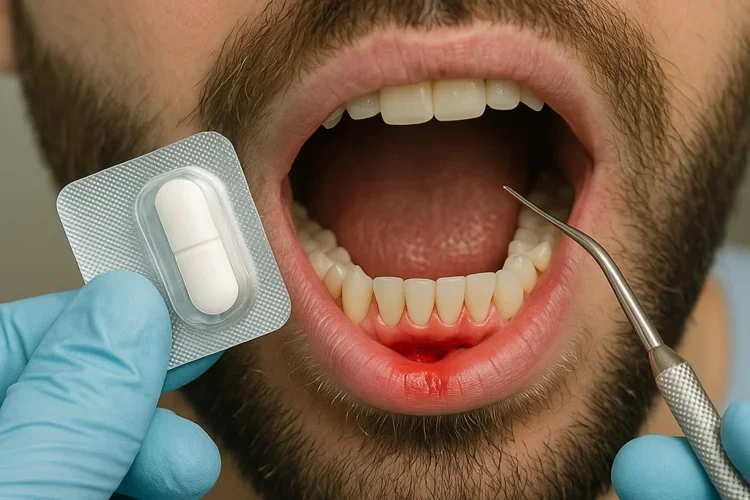
You do not routinely need antibiotics after a simple tooth extraction. A healthy mouth clears bacteria from the socket on its own once the problem tooth is gone, and the blood clot that forms covers the area while it heals. Antibiotics are reserved for four situations: an active infection that is already spreading, a weakened immune system, certain specific heart conditions, and a complex surgical extraction such as a deeply impacted wisdom tooth. Below we cover each of those, what the research actually shows about the benefit, how to protect the site without medication, and the signs of infection that mean you should call us.
Do You Need Antibiotics after a Tooth Extraction?
Most people do not need antibiotics after a tooth extraction, because removing the tooth removes the source of the problem and a healthy body handles the rest. That answer surprises patients who expected a prescription with their aftercare sheet. It reflects current guidance from the American Dental Association, the American Association of Oral and Maxillofacial Surgeons, and Cochrane reviews, all of which agree that routine antibiotics after straightforward extractions in healthy patients do not improve outcomes.
The reasoning starts with what an extraction does. An infected tooth is a sealed reservoir that antibiotics struggle to reach, since the blood supply inside a dying tooth is compromised. Taking the tooth out drains and removes that reservoir directly, which accomplishes what the medication was meant to accomplish. Dental treatment is the treatment, and the prescription is the backup.
Your mouth does the rest of the work. Saliva flows continuously across the site, the clot seals the socket within the first day, and the tissue has a rich blood supply carrying immune cells straight to the wound. That combination is why infection after a routine extraction is uncommon, and why a prescription for every patient would mean medicating a large group to protect a small one.
When Are Antibiotics Needed after a Tooth Extraction?
Antibiotics are needed after a tooth extraction when there is an active infection, when your immune system is compromised, when you have specific cardiac conditions, or when the extraction was complex surgery. Those four categories cover nearly every legitimate prescription.
Active or spreading infection. When the tooth was already abscessed, when swelling extends beyond the tooth into the face or neck, or when there is fever, the infection has moved past the tooth itself and needs treatment alongside the extraction.
A weakened immune system. Poorly controlled diabetes, chemotherapy, organ transplant medication, HIV, and long-term steroid use all reduce how well the body clears bacteria from a fresh wound. The Cochrane evidence base does not cover these patients, so the decision rests on clinical judgment rather than on trial data.
Specific heart conditions. A small group of patients take medication before dental procedures under American Dental Association and American Heart Association guidance, covering the highest-risk cardiac histories such as prosthetic heart valves, prior infective endocarditis, and certain congenital defects.
Complex surgical extraction. A deeply impacted wisdom tooth requiring a gum flap, bone removal, and sectioning creates a larger wound than a simple extraction, and this is the one scenario where the research base is strongest.
Those categories share a logic. Each one describes a situation where either bacteria have already won ground or the body's ability to fight them is reduced. Outside of them, the risk being prevented is small enough that the medication's own risks start to matter. Infection that is actively spreading changes the urgency as well, turning a scheduled appointment into emergency dental care rather than a routine visit.
Why Do Dentists Avoid Prescribing Antibiotics Routinely?
Dentists avoid prescribing antibiotics routinely because unnecessary courses destroy helpful bacteria, drive resistance, and cause side effects without preventing much. Each of those three costs is real, and together they outweigh a small benefit in a healthy patient.
Resistance is the largest concern. The CDC reports at least 2.87 million antibiotic-resistant infections and roughly 35,900 related deaths each year in the United States, and every unnecessary course contributes to the bacteria that cause them. Dentistry carries a meaningful share of that responsibility, since the CDC puts dentists at approximately 10% of all outpatient antibiotics prescribed nationally, and research in Antimicrobial Stewardship and Healthcare Epidemiology found general dentists wrote 25.2 million prescriptions in 2022, with their share of outpatient prescribing rising above 10% as overall prescribing fell.
The scale of the overprescribing has been measured directly. A 2019 study by Suda and colleagues in JAMA Network Open examined 168,420 dental visits involving antibiotic prophylaxis and found that 80.9% of those prescriptions were unnecessary under existing guidelines, with prosthetic joint patients accounting for 46.7% of the unnecessary use. For comparison, the CDC estimates about 30% of antibiotics in outpatient medical settings are unnecessary, which puts the dental figure in stark relief.
Side effects round out the picture. Antibiotics clear helpful bacteria along with harmful ones, which causes digestive upset and allergic reactions, and the CDC notes that dentists are the top prescribers of clindamycin, the antibiotic most associated with Clostridioides difficile infection. Prescribing carefully is part of how we practice general dentistry rather than a way of withholding something from patients.
What Does the Research Say about Antibiotics after Extraction?
The research shows that antibiotics do reduce infection after extraction, but that a large number of healthy patients must take them for one person to benefit. The definitive work is a Cochrane systematic review by Lodi and colleagues, which pooled randomized trials comparing antibiotics against placebo for tooth extraction. The table below sets its findings side by side.
What was measuredWhat the evidence foundReduction in infection riskAbout 66% lower in the 2021 review, about 70% lower in the 2012 versionNumber needed to treat to prevent one infection19 people in the 2021 review, 12 in the 2012 version, about 17 in a separate 2023 meta-analysisNumber needed to harm, meaning one adverse effectOne in every 21 people in the 2012 review, about one in 16 in a related systematic reviewEffect on dry socketReduced, with roughly 14 people needing treatment to prevent one caseCertainty of the evidenceLow certainty in the 2021 update, moderate in the earlier versionWho the trials actually studied21 of 23 trials involved only healthy patients having impacted third molars removed
Reading those two middle rows together is the whole argument. The number needed to prevent one infection and the number needed to cause one side effect sit close enough that the trade-off nearly cancels in a healthy patient. The Cochrane authors said so plainly, concluding that clinicians should weigh carefully whether treating 12 healthy people with antibiotics to prevent one infection does more harm than good. That last row matters just as much, since the trials studied healthy patients having wisdom teeth removed, which means the evidence does not stretch to someone with a compromised immune system.
How Common Is Infection after a Tooth Extraction?
Infection after a tooth extraction is uncommon, affecting a small percentage of patients even without antibiotics. Published figures put surgical site infection after impacted third molar removal at roughly 1.7%, and simple extractions in healthy patients run lower still. The number matters because it sets the baseline the whole decision rests on.
Dry socket is the more frequent complication and is a different problem entirely. It follows 1% to 4% of routine extractions according to published incidence reviews, with higher rates after impacted lower wisdom teeth, and it happens when the blood clot is lost rather than when bacteria take hold. Antibiotics are not the primary answer for it, which is part of why clot protection gets more attention than medication in aftercare instructions.
Low baseline risk is exactly what makes routine prescribing hard to justify. When a complication affects a small share of patients, preventing it across the whole group means medicating a large majority who were never going to develop it. That arithmetic is the reason guidance shifted, and it is the same reasoning behind the shift away from routine premedication for joint replacements.
What Happens If You Do Not Take Antibiotics after a Tooth Extraction?
If you do not take antibiotics after a routine tooth extraction, the socket almost always heals normally on its own. A clot forms within the first day, granulation tissue replaces it across the following week, and gum tissue closes the opening in roughly 7 to 14 days. That sequence runs without medication in the large majority of healthy patients.
Skipping antibiotics does not mean skipping care. The things that actually protect the site are mechanical rather than pharmaceutical: leaving the clot alone, keeping the area clean, and avoiding suction from straws and smoking. Those steps carry more weight in a healthy mouth than any prescription would.
The honest caveat is that no approach removes risk entirely. A small number of patients develop an infection despite doing everything right, which is why knowing the warning signs matters more than carrying a prescription. We would far rather see someone for same-day help than have them wait out a socket that is heading the wrong way. If the medication was prescribed to you, however, finishing the full course as directed is the correct approach rather than stopping once you feel better.
What Are the Alternatives to Antibiotics after a Tooth Extraction?
The alternatives to antibiotics after a tooth extraction are clot protection, gentle cleaning, salt water rinses, and careful surgical technique during the procedure itself. Together these address the actual mechanisms by which infection takes hold, which is why they work as well as they do.
Run the first week this way:
Bite firmly on the gauze pad for 30 to 45 minutes to let the clot form and stabilize.
Leave the site completely alone for the first 24 hours, with no rinsing, spitting, or probing with your tongue.
Skip straws, smoking, and vaping, since the suction pulls directly at the clot.
Start gentle warm salt water rinses after the 24 hour mark, letting the water fall out of your mouth rather than spitting.
Keep brushing the rest of your teeth normally while staying clear of the extraction site itself.
Eat soft, cool foods for the first few days and avoid anything crunchy or seedy that could lodge in the socket.
Rest for the first day or two and skip strenuous exercise, which raises blood pressure at the site.
Watch the direction of your symptoms, since pain that falls day by day means healing is on track.
Two of those deserve emphasis. Salt water rinses are the closest thing to an everyday antiseptic, clearing debris and calming the tissue without disturbing the clot. An antiseptic mouth rinse is sometimes recommended for specific cases, and that is a decision for your dentist rather than something to add on your own. Technique during the extraction itself also lowers infection risk, which is the part patients never see and the reason an unhurried procedure matters. We go through this list in person at our Cinnaminson office so nobody leaves guessing.
What Helps a Tooth Extraction Heal Faster?
What helps a tooth extraction heal faster is protecting the blood clot, staying off nicotine, keeping the area clean, and giving your body real rest in the first two days. Healing speed is mostly about removing obstacles rather than adding anything.
Nicotine is the biggest single obstacle. It narrows the small blood vessels that carry repair cells to the wound, and carbon monoxide from smoke reduces how much oxygen the blood can deliver, so the site starts every day with less of what it needs. Patients who stay off cigarettes and vapes through the first week consistently heal faster than those who do not.
Nutrition and rest fill in the rest. Protein supports tissue repair, hydration keeps saliva flowing across the site, and sleeping with your head slightly elevated reduces overnight throbbing and morning swelling. None of this speeds healing beyond its natural pace, and all of it prevents the setbacks that slow it down.
What Are the Signs of Infection after a Tooth Extraction?
The signs of infection after a tooth extraction are pain that worsens after day three, swelling that returns or spreads, fever, and pus or a foul taste that rinsing does not clear. Each one separates a problem from the ordinary discomfort of healing.
Direction tells you the most. Normal recovery pain peaks early and declines every day afterward, while infection reverses that trend and climbs after a period of improvement. Swelling follows the same rule, cresting between 48 and 72 hours and then fading, so swelling that returns on day five after already going down is a different signal from swelling on day two.
Four symptoms warrant a call rather than a wait: fever or chills, swelling that spreads toward the eye, jaw or neck, pus or discharge from the socket, and difficulty swallowing or opening your mouth. Any of those means the infection has moved beyond what home care handles, and knowing what after-hours problems look like makes the first week much less stressful.
A hospital is a separate decision. An emergency room visit is the right call only for difficulty breathing, swelling that is closing the airway, or uncontrolled bleeding. Everything short of that is handled faster in a dental chair, where the socket can be examined and treated directly.
How Long after an Extraction Does Infection Usually Appear?
Infection after an extraction usually appears one to three days after the procedure, and sometimes later in the first week. That window matters because it overlaps with the days when normal swelling is at its worst, which is why timing alone does not settle the question.
Separating the two comes down to the pattern. Normal inflammation peaks between 48 and 72 hours and then recedes steadily. Infection builds rather than recedes, often brings fever or a bad taste along with it, and does not respond to the pain relief that was working the day before. If your symptoms peak and then improve, that is healing. If they peak and keep climbing, that is not.
Dry socket occupies a different slot. It typically announces itself three to five days after the extraction with pain that radiates toward the ear, eye, or temple, and the socket looks hollow or shows pale bone instead of a dark clot. It is not an infection, though the two get confused constantly because both involve pain that worsens when it should be fading. Either way, escalating symptoms in that window deserve a professional look.
Will a Dentist Pull an Infected Tooth without Antibiotics?
Yes, a dentist will usually pull an infected tooth without first putting you on antibiotics, because removing the tooth removes the source of the infection. This is one of the most common misconceptions patients bring in, often after being told years ago that an infected tooth must be medicated before it can come out.
The reasoning is practical. An infected tooth has a compromised blood supply, which means antibiotics reach it poorly, and waiting on a course of medication leaves the source in place while the infection continues. Extraction drains the abscess and removes the reservoir in one step, and American Dental Association guidance on dental pain and swelling emphasizes definitive dental treatment over antibiotics for conditions without systemic involvement.
Antibiotics join the plan when the infection has spread beyond the tooth. Facial swelling, fever, malaise, or difficulty swallowing all indicate systemic involvement, and in those cases medication works alongside the extraction rather than in place of it. Patients weighing whether an infected tooth can be treated at all usually want to know the alternative first.
Removal is never the opening move. A conversation about saving a tooth happens before any extraction is scheduled, since an infection inside the tooth can often be cleared while the tooth itself stays in place.
Do You Need Antibiotics before a Tooth Extraction?
Most people do not need antibiotics before a tooth extraction, though a small group takes a single preventive dose for specific medical reasons. That practice is called antibiotic prophylaxis or premedication, and it is given before the appointment rather than after it.
The purpose is different from treating an infection. During any procedure that disturbs the gum tissue, a small number of oral bacteria enter the bloodstream briefly. For nearly everyone that is harmless and happens during ordinary brushing and chewing anyway. For a few patients with specific cardiac histories, those bacteria could settle on damaged heart tissue, and a preventive dose beforehand reduces that risk.
The list of who qualifies has shrunk considerably. American Dental Association and American Academy of Orthopaedic Surgeons guidance has recommended against routine premedication for most prosthetic joint patients since 2015, and the CDC notes that dental procedures pose no greater bacteremia risk for joint replacement patients than brushing teeth or eating. That shift matters, since the Suda study found joint replacement patients made up 46.7% of all unnecessary prophylaxis. Coverage questions sometimes come up alongside this conversation, and our front desk can review your dental coverage before the appointment.
Who Needs Antibiotic Premedication before Dental Work?
Antibiotic premedication before dental work is recommended for a small group of patients with the highest-risk cardiac conditions, according to American Dental Association and American Heart Association guidance. That group includes people with prosthetic heart valves or valve repair material, a prior history of infective endocarditis, certain congenital heart defects, and heart transplant recipients who develop valve problems.
Several conditions people assume require premedication generally do not. Routine joint replacements, mitral valve prolapse, common heart murmurs, and a history of coronary bypass or stents all fall outside current recommendations for most patients. Those changes came from evidence that the risks of unnecessary antibiotics outweighed the small benefit.
The decision belongs to your physician as much as to your dentist. If a cardiologist, orthopedic surgeon, or primary care physician has told you to premedicate, bring that instruction to the appointment and we work with it rather than overriding it. Give us your full medical history at the planning visit either way, since that history is what the decision rests on.
Do You Need Antibiotics after Wisdom Tooth Extraction?
You do not automatically need antibiotics after wisdom tooth extraction, though impacted lower wisdom teeth are the case where prescribing is most defensible. This is the specific scenario the research actually studied, since 21 of the 23 trials in the Cochrane review involved healthy patients having impacted third molars removed.
Surgical complexity is what tips the balance. A deeply impacted lower wisdom tooth requires opening the gum, removing a small amount of bone, and often sectioning the tooth, which creates a larger wound in dense bone with limited blood supply. That combination carries more risk than lifting out an erupted upper tooth, and dry socket rates reflect it, running 5% to 30% after impacted lower third molars compared to 1% to 4% after routine extractions.
Even there, the decision is case by case. The Cochrane numbers still apply, meaning roughly 19 patients take antibiotics for one infection prevented, and a systematic review published in Medicina reached a similar figure of about 17 while concluding this does not support routine use. Depth of impaction, how long the appointment ran, your medical history, and whether infection was present beforehand all feed into the call your surgeon makes.
Do Antibiotics Prevent Dry Socket?
Antibiotics reduce the risk of dry socket somewhat, but they are not the main defense against it. Review data puts the number needed to treat at roughly 14 patients to prevent one case, which is a real effect and a modest one.
The reason the effect is limited is that dry socket is primarily a mechanical problem. The clot is lost through suction, forceful rinsing, or disturbance of the site, and no medication holds a clot in place. Smoking is the single largest controllable risk factor, with a systematic review finding more than a threefold increase in dry socket odds among smokers and pooled incidence of 13.2% in smokers compared to 3.8% in nonsmokers.
Protecting the clot does more than any prescription. No straws, no smoking, no forceful spitting, and no poking at the site for the first several days covers the large majority of the risk. If pain climbs sharply three to five days after your extraction, that is worth a call for a urgent dental visit, since dry socket is treated in the office with irrigation and a medicated dressing rather than with a prescription.
What Do Dentists Prescribe after a Tooth Extraction?
What dentists most often prescribe after a tooth extraction is pain relief rather than antibiotics. The 2024 American Dental Association clinical practice guideline on acute dental pain recommends nonsteroidal anti-inflammatory drugs, alone or combined with acetaminophen, as first-line therapy after a tooth extraction, with opioids reserved for cases where first-line relief falls short or cannot be used.
That guidance reflects how post-extraction discomfort actually works. The soreness comes from inflammation, and anti-inflammatory medication targets the mechanism directly, which is why it outperforms stronger drugs for this particular job. Many patients need nothing beyond over-the-counter options their dentist recommends.
Antibiotics appear in the plan only when one of the four indications applies. Antiseptic mouth rinses are sometimes added for specific cases, and a medicated dressing is used in the office for dry socket rather than sent home. Dr. Cho goes over whatever is prescribed and why at the end of the appointment, so you leave knowing the reason behind each item rather than just the instructions.
When Should You Start Antibiotics after a Tooth Extraction?
You should start antibiotics exactly when your dentist tells you to, following the schedule written on the prescription. There is no single correct answer that applies to everyone, because the timing depends on the drug, the reason it was prescribed, and whether it is treating an existing infection or preventing one.
Two patterns are common. Preventive doses given for cardiac reasons are usually taken shortly before the appointment rather than afterward, since the point is having the medication in your system while bacteria are entering the bloodstream. Treatment courses for an active infection generally begin right after the appointment and run for the number of days specified. Your prescription tells you which situation applies to you.
Finishing the course matters regardless. Stopping early because symptoms improved leaves the hardiest bacteria behind, which is one of the ways resistance develops in the first place. Never take antibiotics left over from a previous illness or borrowed from someone else, and never skip a prescribed course because an article suggested most people do not need one. Anything that is unclear is worth a quick phone call to our Cinnaminson office rather than a guess.
Frequently Asked Questions
Does Diabetes Mean You Need Antibiotics after an Extraction?
Diabetes does not automatically mean you need antibiotics after an extraction, though poorly controlled diabetes raises infection risk enough that your dentist may recommend them. Well-managed blood sugar puts a patient much closer to the general population in terms of healing. The decision rests on how controlled the condition is, not on the diagnosis alone, which is why recent lab results are worth sharing at the planning visit.
Do You Still Need Antibiotics If the Tooth Was Already Infected?
You do not always need antibiotics even when the tooth was already infected, because the extraction itself removes the source and drains the abscess. Antibiotics are added when the infection has spread beyond the tooth into surrounding tissue, signaled by facial swelling, fever, or malaise. American Dental Association guidance emphasizes definitive dental treatment over antibiotics for localized infections where treatment is available.
Can an Extraction Heal without Antibiotics?
An extraction heals without antibiotics in the large majority of healthy patients. A blood clot forms within 24 hours, granulation tissue replaces it across days four to seven, and gum tissue closes over the socket in roughly 7 to 14 days, all without medication. Published figures put surgical site infection after impacted third molar removal at roughly 1.7%, and simple extractions run lower.
Should You Finish the Whole Course If You Feel Fine?
You should finish the whole course exactly as prescribed, even once you feel completely better. Stopping early can leave the most resistant bacteria behind, which is one of the mechanisms that makes future infections harder to treat. Any question about an ongoing course belongs with the dentist or physician who prescribed it rather than being decided at home.
What Are the Downsides of Taking Antibiotics You Do Not Need?
The downsides of unnecessary antibiotics are digestive upset, allergic reactions, disruption of helpful bacteria, and a contribution to antibiotic resistance. The CDC reports at least 2.87 million antibiotic-resistant infections and roughly 35,900 related deaths annually in the United States. Even short courses carry risk, and the CDC notes that dentists are the top prescribers of clindamycin, the antibiotic most associated with Clostridioides difficile infection.
The Bottom Line
Antibiotics are not part of routine recovery after a tooth extraction, and that is a deliberate clinical position rather than an oversight. Removing the tooth removes the source, the clot seals the socket, and a healthy body clears the rest. The Cochrane evidence shows roughly 19 healthy patients would need to take antibiotics to prevent one infection, while about one in every 16 to 21 would experience a side effect, which is why guidance reserves them for specific situations.
Those situations are worth memorizing: active or spreading infection, a compromised immune system, specific high-risk cardiac conditions, and complex surgical extractions. Everyone else protects the site mechanically instead, by leaving the clot alone, staying off nicotine, rinsing gently after the first day, and watching the direction of their symptoms. Pain that falls day by day means healing. Pain, swelling, or fever that climbs after day three means call.
If you have an extraction coming up or a healing site that does not feel right, we will look at it and tell you honestly whether medication is warranted at Alpha Dental Spa.
Bring your full medical history and any instructions from your physician, since both shape the decision, and you are welcome to reach our office with questions at any point in your recovery.