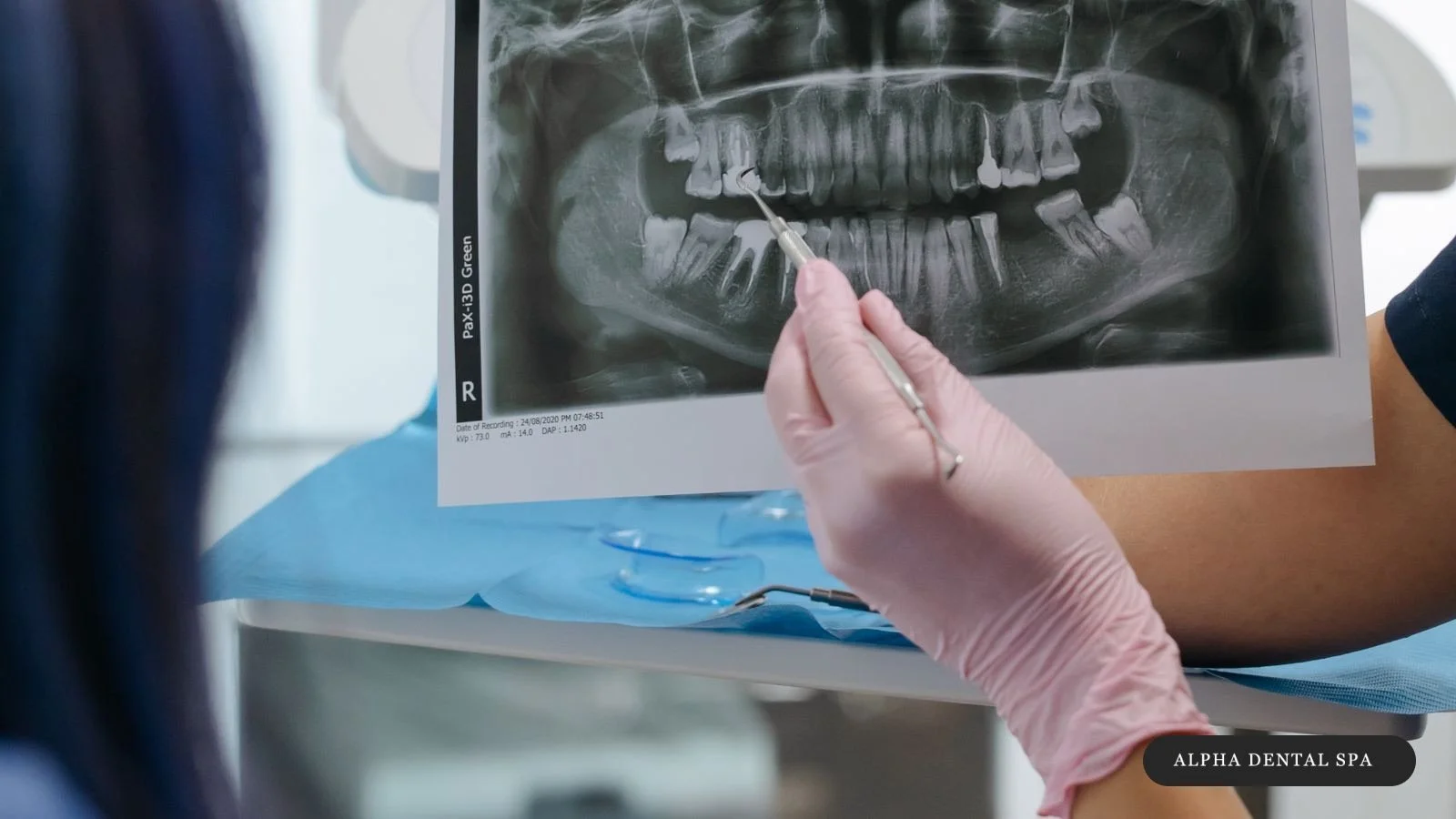
A dental abscess is a pocket of pus caused by a bacterial infection in or around a tooth, according to MedlinePlus. Tooth decay, a cracked tooth, or gum disease usually starts it. Cleveland Clinic names 3 types. The pain can stop while the infection keeps spreading. The NHS states that a dental abscess will not go away on its own and needs urgent treatment.
Key Takeaways
- MedlinePlus defines a tooth abscess as a pocket of pus from a bacterial infection in or around a tooth.
- Cleveland Clinic names three types: gingival, periapical, and periodontal.
- An abscess will not heal alone, and pain can stop while the infection stays active, per the NHS and MedlinePlus.
- Cleveland Clinic lists fever of 100.4 degrees Fahrenheit or higher, confusion, and trouble swallowing as emergency room signs.
- Dentists treat an abscess with drainage, a root canal, or extraction, and the ADA limits antibiotics to cases with systemic involvement.
What Is a Dental Abscess?
A dental abscess is a pocket of pus from a bacterial infection in or around a tooth. The pus holds dead tissue and white blood cells that the body used to fight the bacteria, according to Cleveland Clinic.
The infection usually starts inside the tooth, in the soft center called the pulp. Dentists treat the problem as urgent because the pus still contains bacteria that can spread. Prompt abscess treatment stops that spread and relieves the pain.
Patients who search what is dental abscess usually want the cause first. The next section covers it.
What Is the Main Cause of a Dental Abscess?
The main cause of a dental abscess is bacteria entering the tooth or gums through an opening. MedlinePlus lists tooth decay and a broken, chipped, or injured tooth as common openings. Bacteria then reach the pulp and spread toward the root.
Cleveland Clinic adds gum disease and tooth injury, even without a visible crack. The NHS lists an impacted tooth, radiotherapy, and chemotherapy as further causes. These dental abscess causes all give bacteria a path to deeper tissue.
What Triggers a Tooth Abscess?
A tooth abscess is triggered by a severe cavity, a cracked tooth, gum disease, or an injury to the tooth. Each trigger creates an opening for bacteria. Cleveland Clinic also notes that smokers are about twice as likely to get tooth abscesses as non-smokers.
Dry mouth, poor oral hygiene, and a weakened immune system are further risk factors in the same source. The next section explains how the location of the infection sets the type.
What Are the Types of Dental Abscess?
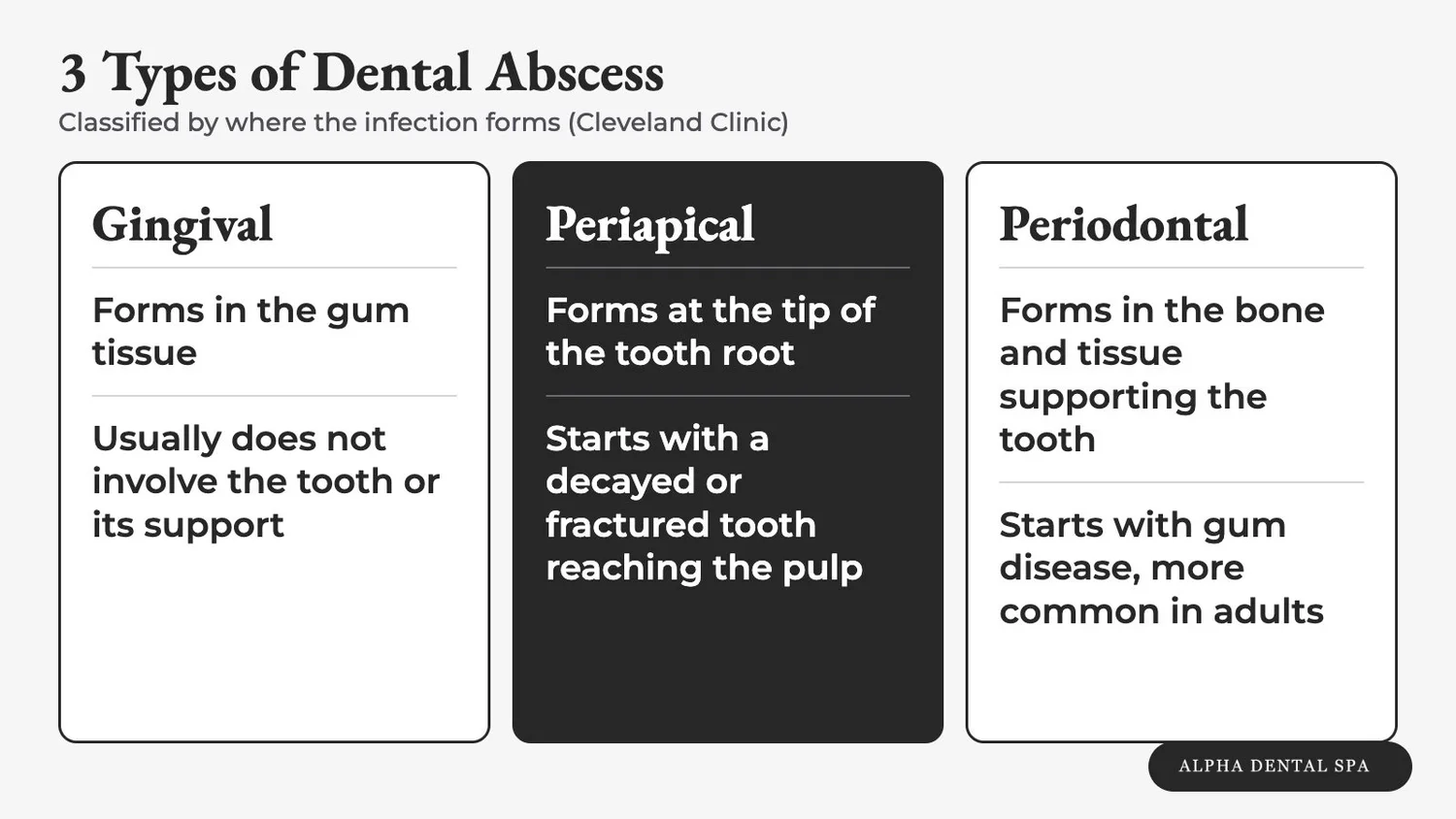
The types of dental abscess are gingival, periapical, and periodontal, according to Cleveland Clinic. Each type is named for where the infection forms. The table below compares the three types and the usual starting point of each.
| Type | Where it forms | Usual starting point |
|---|---|---|
| Gingival | In the gum tissue | Usually does not involve the tooth or its support |
| Periapical | At the tip of the tooth root | A decayed or fractured tooth reaching the pulp |
| Periodontal | In the bone and tissue supporting the tooth | Gum disease, more common in adults |
The graphic below shows the three types side by side with the same details as the table.
Pericoronal abscesses form around a partly erupted tooth such as a wisdom tooth. Signs of a wisdom tooth infection overlap with the symptoms described next.
What Is Stage 1 Gum Abscess?
A stage 1 gum abscess is the earliest form of a gingival abscess, usually a red, swollen bump on the gum. Cleveland Clinic states that an abscess usually looks like a red, swollen bump, boil, or pimple. No major dental body defines numbered tooth abscess stages, so a dentist must examine any bump.
How Do You Know If You Have a Dental Abscess?
You know you have a dental abscess when you have a severe, continuous toothache plus swelling, fever, or a bad taste. MedlinePlus describes the main symptom as severe, continuous pain that is gnawing, sharp, shooting, or throbbing. Only a dentist can confirm the diagnosis.
Knowing what is a dental abscess starts with its symptoms. The ADA lists pain, swelling, redness in the gums, a bad taste, and fever as abscess symptoms. Dental abscess symptoms also include the signs in the list below.
- Pain when chewing or biting
- Sensitivity to hot or cold
- A pimple-like bump on the gum
- Bad breath or a bitter taste
- Swollen glands in the neck
- Swelling in the upper or lower jaw
A swollen jaw is flagged as very serious by MedlinePlus. The next section covers how an abscess feels at the start.
What Does a Tooth Abscess Feel Like When It Starts?
A tooth abscess feels like a persistent toothache that may throb or radiate when it starts. Cleveland Clinic reports that the pain can spread to the ear, jaw, or neck. The pain may hurt all the time or only during chewing.
Tooth abscess symptoms may also begin with gum redness and tenderness near one tooth. A dentist can then check the tooth with taps, pressure, and an X-ray. The next question covers conditions that look similar.
What Can Be Mistaken as a Tooth Abscess?
An infected tooth without a pocket of pus is the closest look-alike to a tooth abscess. Cleveland Clinic explains that all abscesses are infections, but not all tooth infections lead to an abscess. Both need dental care, so a dentist should examine any lasting toothache or gum bump.
A dentist uses a tooth exam and X-rays to tell the conditions apart, per MedlinePlus. The exam can also show which tooth is the source.
Will a Dental Abscess Go Away on Its Own?
A dental abscess will not go away on its own. The NHS states this directly, and Cleveland Clinic agrees that the bacteria keep spreading and destroying nearby tissue without treatment. A dentist must remove the source of the infection.
Pain relief at home is temporary and does not clear the infection. The toothache relief steps only cover the wait until the dental visit.
Why Does Abscess Pain Sometimes Stop Suddenly?
Abscess pain sometimes stops suddenly because pressure is relieved or because the nerve inside the tooth has died. MedlinePlus states that the toothache may stop when pressure eases, but the infection stays active. Cleveland Clinic says the dead pulp can no longer send pain signals.
The infection still spreads in that state. Sudden relief is therefore a reason to book a visit, not to cancel one.
How Long Is Too Long to Leave a Tooth Abscess?
Any delay is too long to leave a tooth abscess untreated. Cleveland Clinic states that the spread can take days, weeks, or months, and no one can predict the timing. The infection can reach the jaw and the soft tissue of the face and neck.
MedlinePlus lists tooth loss, blood infection, and spread to the jaw bone as possible complications. Early care protects the tooth as well.
Can I Wait 2 Weeks for a Tooth Abscess?
No, waiting 2 weeks for a tooth abscess is not advised. The NHS says a dental abscess needs urgent treatment and will not go away alone. Call a dentist right away, and seek emergency care if emergency signs appear.
Understanding what is a dental abscess explains why delay is risky. Spread timing varies, which is why Cleveland Clinic tells patients to see a dentist as soon as possible. The next section lists the emergency signs.
When Does a Dental Abscess Become an Emergency?
A dental abscess becomes an emergency when it comes with fever, confusion, trouble swallowing, an elevated heart rate, or facial swelling. Cleveland Clinic includes a fever of 100.4 degrees Fahrenheit (38 degrees Celsius) or higher. Those signs call for an emergency room.
The NHS adds trouble breathing or speaking, a painful eye, and trouble opening the mouth as reasons for emergency care. In the United States, call 911. The guide on toothache or emergency shows how to sort symptoms.
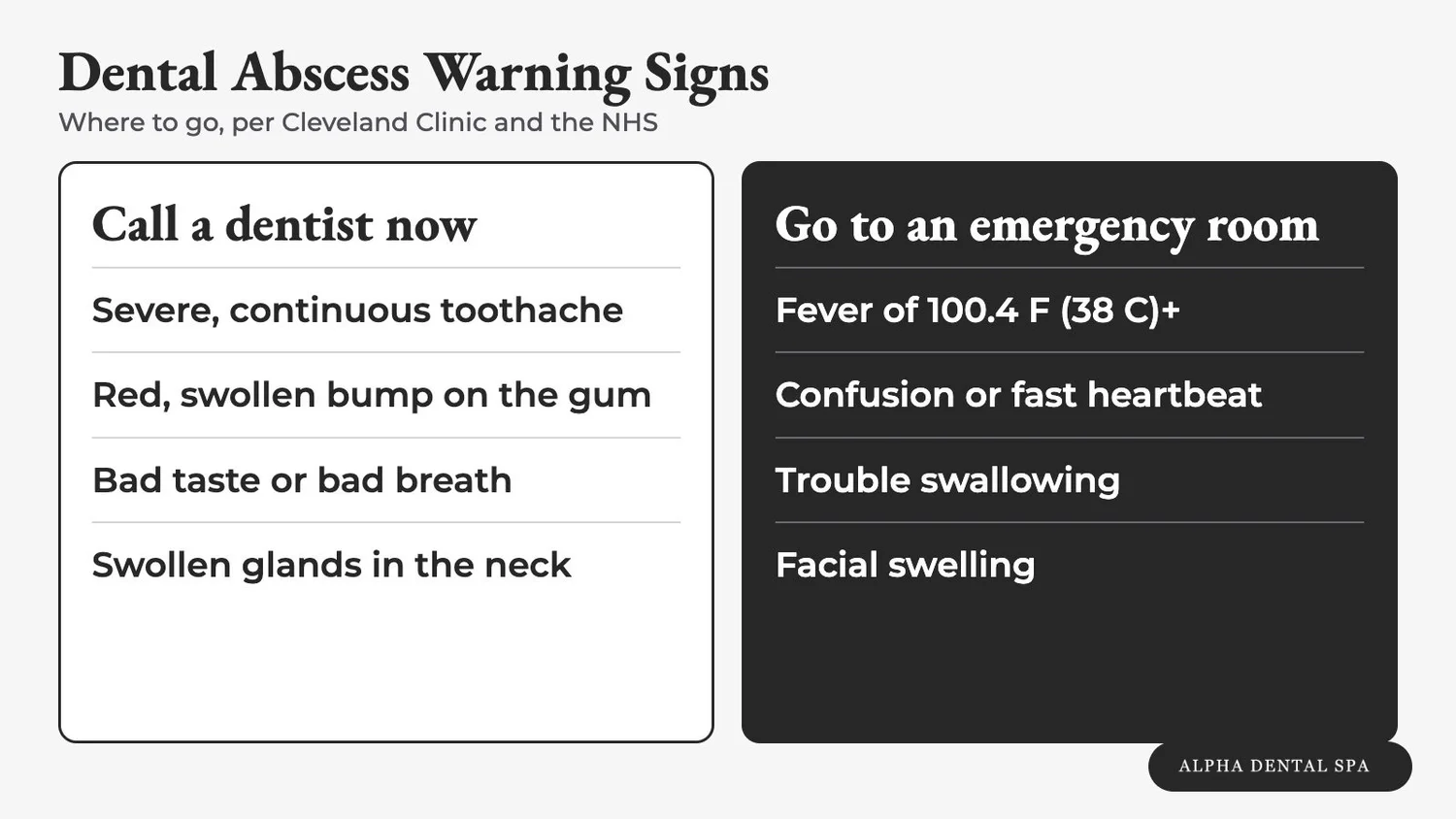
The graphic above separates dentist-now signs from emergency-room signs. The guide on dentist or ER compares the two options in more detail.
How Quickly Can a Tooth Abscess Turn Septic?
A tooth abscess can turn septic over a few hours, but the time before that point varies. The NHS states that sepsis usually develops quickly over a few hours. Cleveland Clinic says no one can predict how long an abscess takes to spread.
Sepsis is an emergency, and MedlinePlus notes that patients are treated in a hospital, usually in intensive care. How sepsis feels is covered next.
What Does Tooth Sepsis Feel Like?
Tooth sepsis feels like fever or chills with confusion, fast breathing, and a rapid heartbeat on top of dental pain. MedlinePlus states that a change in mental status and very fast breathing may be the earliest signs of sepsis. Lightheadedness and skin changes can also occur.
These signs need emergency care. The same source says sepsis can follow a bacterial infection anywhere in the body.
How Does a Dentist Get Rid of an Abscess?
A dentist gets rid of an abscess by draining the pus, treating or removing the source tooth, and sometimes prescribing antibiotics. The ADA lists drainage, root canal treatment, and gum cleaning as treatment methods. The choice depends on the cause and severity.
The steps below show a typical dental abscess treatment visit, based on the ADA, Cleveland Clinic, and MedlinePlus.
- The dentist examines the tooth and gums and taps the tooth to check for sensitivity.
- The dentist takes X-rays to find which tooth is the source.
- The dentist numbs the area with local anesthesia, per the NHS.
- The dentist drains the pus, cleans the tooth with a root canal, or removes the tooth.
- The dentist may prescribe antibiotics if the infection has spread or symptoms are systemic.
The flow graphic below summarizes these treatment paths.
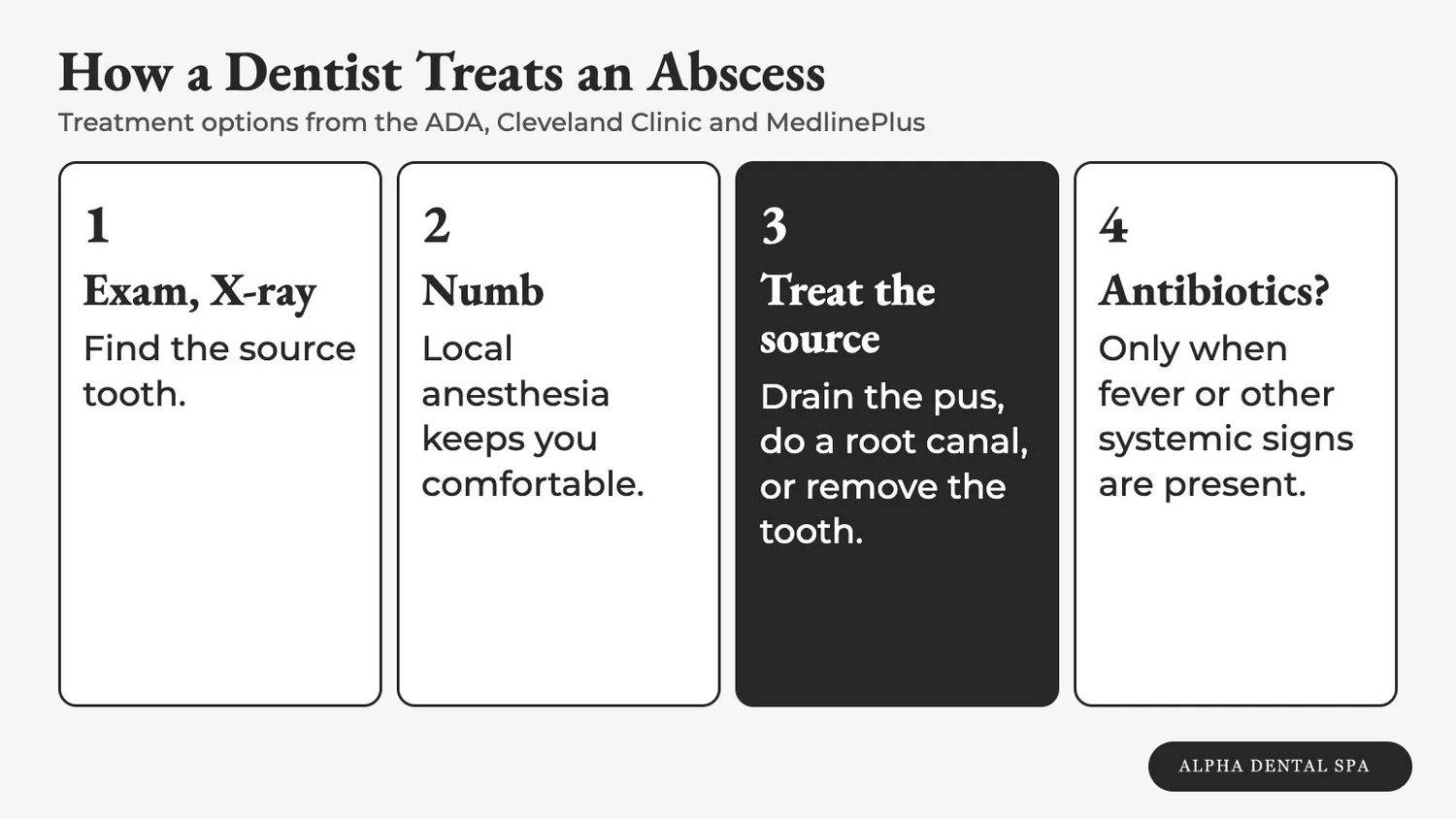
Each path removes the source of infection. A root canal choice keeps the tooth, while extraction removes it.
Why Won't the Dentist Drain an Abscess?
A dentist may not drain an abscess when another treatment removes the cause more directly. Cleveland Clinic lists drainage as one option beside a root canal and extraction. Drainage relieves pressure, but the infected tooth is the source.
The ADA guideline says definitive dental treatment should be the priority in all cases. A patient who wonders why drainage was skipped can ask the dentist which treatment targets the source.
Can a Tooth Abscess Go Away With Just Antibiotics?
No, a tooth abscess does not go away with just antibiotics. Cleveland Clinic states that antibiotics may fight remaining bacteria but do not remove the cause, which is the affected tooth. Dental treatment is still required.
The ADA 2019 guideline found likely negligible benefits and potentially large harms from antibiotics in most cases. The guideline recommends them when systemic involvement, such as fever or malaise, is present. An antibiotic use guide covers the post-extraction case.
What Kills Tooth Abscess Bacteria?
Dental treatment kills tooth abscess bacteria by removing infected tissue and draining the pus. A root canal removes the infected pulp and seals the tooth, per Cleveland Clinic. Antibiotics help only when the infection has become systemic.
The ADA also lists gum cleaning when gum disease caused the abscess. Home rinses only ease discomfort, according to MedlinePlus.
Is Removing a Dental Abscess Painful?
Removing a dental abscess involves little pain because the dentist numbs the area first. The NHS states that patients receive a local anesthetic so they do not feel pain. The ADA says a root canal involves little to no pain for the same reason.
The ADA states that a root canal usually takes 1 or 2 office visits. Soreness afterward is managed with painkillers the dentist recommends. When a tooth cannot be saved, tooth removal is the alternative.
How Long Does a Tooth Abscess Take to Drain?
A dentist drains a tooth abscess during the visit, and no source gives a fixed time for tooth abscess drainage. Cleveland Clinic says the dentist makes a small incision and may place a small rubber drain. Patients may need a few days to feel completely back to normal.
Temporary sensitivity is common after treatment, per the same source. A draining sore on the gum can also signal an abscess that needs a dentist.
What Can You Do Before Your Dental Visit?
Before a dental visit, you can take painkillers as directed, eat soft foods, and use a soft toothbrush. The NHS gives these steps for pain from a dental abscess. None of them treat the infection, so the dental visit stays necessary.
The NHS also says to avoid very hot or cold food and drink. The NHS warns that a higher painkiller dose will not work better and can be dangerous. Children under 16 should not take aspirin, and MedlinePlus says not to place aspirin directly on the tooth or gums. The emergency first steps list adds more detail.
Should I Still Brush My Teeth If I Have an Abscess?
Yes, you should still brush your teeth if you have an abscess, using a soft toothbrush. The NHS recommends a soft toothbrush while waiting for treatment.
Can I Treat a Tooth Abscess Without Going to the Dentist?
No, you cannot treat a tooth abscess without going to the dentist. MedlinePlus says warm saltwater rinses and over-the-counter pain relievers only ease symptoms. The infection stays active until a dentist removes its source.
What Else Should You Know About a Dental Abscess?
What Is the Difference Between an Infected Tooth and an Abscessed Tooth?
An abscessed tooth has a pocket of pus, while an infected tooth may not. Cleveland Clinic states that every abscess is an infection, but not every tooth infection becomes an abscess. A dentist can tell which one is present.
Who Is More Likely to Get a Dental Abscess?
Smokers and people with dry mouth, poor oral hygiene, or a weak immune system are more likely to get a dental abscess. Cleveland Clinic reports that smokers are about twice as likely to get tooth abscesses. These groups benefit from regular checkups.
Can a Dental Abscess Be Prevented?
A dental abscess can be reduced by regular checkups, cleanings, and prompt care for decay. MedlinePlus says treating decay quickly lowers the risk. The NHS adds brushing with fluoride toothpaste twice a day and cleaning between the teeth daily.
Frequently Asked Questions
Will Removing a Tooth Stop an Abscess?
Removing the source tooth removes the cause of the abscess. MedlinePlus states that a severely infected tooth may need to be removed. The dentist also drains remaining pus when needed.
Will a Dentist Know If I Have Sepsis?
A dentist can spot warning signs such as fever, swelling, and trouble swallowing, but sepsis is diagnosed in a hospital. MedlinePlus says sepsis is often confirmed by a blood test. A dentist will refer you for emergency care if sepsis is suspected.
What Are the Four Stages of an Abscess?
No major dental authority defines four official stages of a tooth abscess. The sources describe a progression instead. Infection reaches the pulp, pus collects, and the spread can reach nearby tissue. A dentist should assess any suspected abscess.
What Is a Stage 4 Abscess Tooth?
A stage 4 abscess tooth is not a defined clinical term in the ADA, NHS, MedlinePlus, or Cleveland Clinic sources. MedlinePlus describes the most serious outcome as spread beyond the mouth, which can cause blood infection or brain abscess. Those signs need emergency care.
How Does Alpha Dental Help With a Dental Abscess?
We help with a dental abscess by examining the tooth, finding the source, and recommending treatment. Dr. Hayat and our team see patients with tooth pain and swelling at our Cinnaminson office. Knowing what is a dental abscess lets you call early.
Patients with swelling or severe pain can call us for urgent abscess care. We also treat related problems such as broken teeth and extractions. A throbbing toothache, gum bump, or facial swelling does not need to wait for a routine checkup.
The exam covers the tooth, the gums, and any swelling, and the dentist explains each treatment option before starting. Our front desk can answer questions about scheduling, and patients can ask for an emergency appointment by phone or online.
Dr. Hayat explains what the X-ray shows and which treatment fits the cause of the infection. Our team keeps visits calm and clear from the first call to follow-up care. Anyone with an abscess can reach Alpha Dental practice by phone at (856) 829-1989. Call 911 or go to an emergency room for the warning signs listed above.