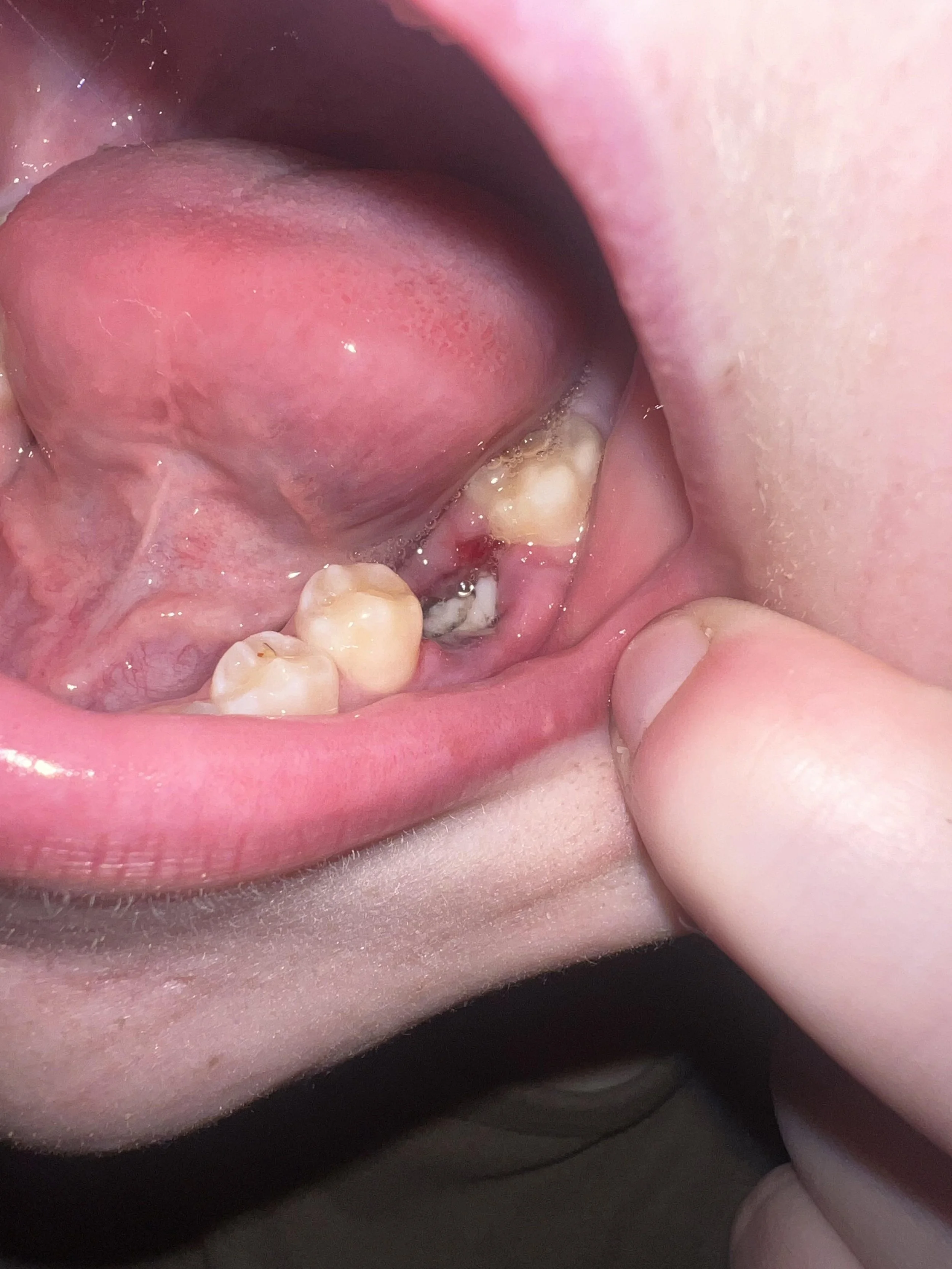
An infected tooth extraction site looks intensely red, swollen, and glossy around the socket, and it often has visible white, yellow, or green pus leaking from the hole where the tooth used to be. The gums surrounding an infected extraction feel hot to the touch, and the tissue may appear puffy or shiny well beyond the first two days of healing. A healthy extraction site, by contrast, holds a dark red or brownish blood clot, shows only mild redness, and improves a little more each day. Pain that gets worse after day three, a foul taste that will not go away, and swelling that keeps growing instead of shrinking are the clearest signals that bacteria have taken hold of the socket.
Knowing what normal healing looks like makes it much easier to spot when something has gone wrong. The rest of this article walks through each stage of normal recovery, shows exactly how an infected socket differs at every stage, and covers what to do if you notice warning signs.
What Does a Normal Tooth Extraction Look Like When Healing?
A normal tooth extraction looks different at each stage of recovery, and every stage follows a predictable pattern. Your body begins repairing the wound within minutes of the procedure. According to clinical data published by Aspen Dental, gum tissue heals within one to two weeks after a routine extraction, while full bone remodeling beneath the surface takes three to six months. Understanding this timeline helps you tell the difference between expected changes and early signs of trouble.
The healing process moves through distinct phases. Each phase changes the look and feel of the extraction site in specific ways.
First 24 hours: A dark red or maroon blood clot forms inside the empty socket. This clot acts as a natural bandage that shields the exposed bone and nerve endings underneath. Light bleeding and mild oozing are normal during this window. The gums around the socket may appear slightly swollen and pink.
Days 2 to 3: Swelling peaks during this window and may spread to the cheek or jawline, especially after a root canal alternative like a surgical extraction. The blood clot darkens to a brownish-red color and sits at or just below the gum line. Mild soreness continues but responds to over-the-counter pain medication.
Days 4 to 7: The blood clot gradually transforms into granulation tissue, a soft pinkish-white material made of new blood vessels and collagen. Swelling decreases steadily. Pain fades each day. The socket starts to look smaller as new gum tissue grows inward from the edges.
Weeks 2 to 4: Gum tissue closes over the socket almost completely. The area appears pink and smooth, closer to the surrounding healthy tissue. The socket may still feel slightly indented, but discomfort is minimal or gone entirely.
The most important rule is that each day should feel a little better than the day before. A normal extraction follows a downward slope of pain, swelling, and redness. Any reversal of that pattern, where symptoms get worse instead of better, signals a potential problem.
What Should a Tooth Extraction Look Like on Day 3?
A tooth extraction on day three should show a stable blood clot that has darkened from bright red to brownish-red, mild residual swelling that has started to decrease, and gums that look slightly pink or reddish but not intensely inflamed. The socket itself may begin developing a thin white or cream-colored layer on its surface. This layer is granulation tissue, not infection.
Granulation tissue forms when your body sends collagen and new blood vessels to the wound site. Research from Aspen Dental confirms that this pinkish-white material begins replacing the blood clot starting around day three to four. Swelling on day three may still be visible along the jawline, but it should feel softer and smaller than it did on day two. Pain should respond to ibuprofen or acetaminophen without escalating.
Is White Stuff on a Tooth Extraction Normal?
Yes, white stuff on a tooth extraction is normal in most cases. The white or cream-colored material you see forming over the socket between days three and seven is typically granulation tissue or fibrin, both of which are healthy parts of the wound-healing process. Granulation tissue looks soft, slightly textured, and off-white to pale pink. Fibrin appears as a thin yellowish-white film over the clot surface.
The distinction between granulation tissue and pus matters. Granulation tissue stays in place, does not smell, and does not ooze when touched. Pus, on the other hand, is a thicker fluid that ranges from bright white to yellow or green. Pus has a foul smell, often comes with a bad taste, and may leak from the socket when you press gently near the area. Pus signals that bacteria have colonized the extraction site and that your immune system is actively fighting the infection.
Color alone does not tell the full story. A white layer without pain, fever, or worsening swelling is almost always healthy tissue. A white or yellowish substance paired with throbbing pain, spreading redness, and a foul odor is almost always pus.
What Does an Infected Tooth Extraction Hole Look Like?
An infected tooth extraction hole looks red, swollen, and inflamed well beyond what you would expect during normal healing. The gums around the socket appear puffy, glossy, and darker red than surrounding tissue. Visible white, yellow, or green pus may be leaking from the socket or pooling around the edges of the hole. The blood clot inside the socket may look discolored, broken down, or absent entirely.
Infected extraction sites also feel different from healthy ones. The tissue around the socket feels hot to the touch, almost like the gums are radiating warmth. The hole itself may appear larger than expected because swelling pushes the gum edges outward. In some cases, you may notice that the gums look shiny or stretched rather than the matte pinkish tone of healthy healing tissue.
A study published in the International Journal of Environmental Research and Public Health reviewed 1,821 dental extractions over six years and found a postoperative infection rate of 1.4%. Although infections after dental emergencies and routine extractions are relatively uncommon, they require prompt attention because the bacteria responsible can spread quickly through surrounding soft tissue and bone.
How Do You Know If Your Tooth Extraction Is Infected?
You know your tooth extraction is infected when the symptoms reverse direction, getting worse instead of better after the first two to three days. A healthy extraction follows a steady downward trend in pain, swelling, and bleeding. An infected extraction breaks that trend with escalating symptoms that do not respond to standard aftercare.
The most reliable warning signs of an infected tooth extraction include pain that intensifies or returns after it started improving, swelling that grows larger after the 48-hour mark instead of shrinking, a persistent bad taste or foul smell that will not go away with brushing or rinsing, visible pus draining from the extraction socket, a body temperature above 100.4 degrees Fahrenheit (38 degrees Celsius), tender or swollen lymph nodes under the jaw or along the neck, difficulty opening the mouth fully (a condition called trismus), and bleeding that restarts days after the procedure.
Any single symptom from this list deserves a call to your dentist. Multiple symptoms appearing together strongly suggest that bacteria have invaded the extraction site. A retrospective study published in the journal Oral Surgery found that the reported incidence of delayed-onset infection after tooth extraction ranges from 0.5% to 1.8%, with most infections developing between days three and seven post-extraction. This three-to-seven-day window is when the blood clot is most vulnerable to bacterial colonization.
What Does a Serious Tooth Infection Feel Like?
A serious tooth infection feels like deep, throbbing pain that pulses with your heartbeat and radiates from the extraction site into the jaw, ear, or neck on the same side. Serious tooth infections produce pain that does not respond to over-the-counter medication the way normal post-extraction soreness does. The throbbing quality comes from increased blood flow to the infected area as your immune system sends white blood cells to fight the bacteria.
Patients with serious infections also describe a constant pressure or fullness in the jaw, difficulty swallowing or opening the mouth, and an overwhelming sense of fatigue. The bad taste in the mouth becomes persistent and bitter rather than the mild metallic taste that occurs during normal healing. Some patients experience chills, body aches, and night sweats alongside the localized tooth pain, which signals that the infection has triggered a systemic immune response.
What Is the Difference Between Dry Socket and Infection After Tooth Extraction?
The difference between dry socket and infection after tooth extraction comes down to what caused the problem and how it presents. Dry socket (alveolar osteitis) happens when the protective blood clot dislodges or dissolves too early, leaving the underlying bone and nerve endings exposed. Infection happens when bacteria invade the extraction wound and multiply inside the socket. Both conditions cause significant pain, but they look different, feel different, and require different treatment approaches.
Dry socket typically appears as an empty-looking hole with visible whitish bone at the bottom and no clot present. The pain from dry socket is sharp, radiating, and often described as the worst dental pain a patient has experienced. Dry socket usually begins two to three days after the extraction. An infected socket, by contrast, shows redness, swelling, pus, and often fever. The pain from infection tends to build gradually and may throb rather than radiate.
A systematic review published in the International Journal of Molecular Sciences found that the combined incidence of dry socket in smokers reaches 13.2%, compared to 3.8% in nonsmokers. Smokers face more than three times the odds of developing this complication. Dry socket rates for routine extractions range from 1% to 5%, while surgical wisdom tooth extractions carry rates as high as 20% to 30% in certain populations, according to clinical literature reviewed at Harvard-affiliated Massachusetts Eye and Ear Infirmary.
FeatureDry SocketInfected ExtractionCauseBlood clot lost or dissolved too earlyBacteria invade the wound and multiplyAppearanceEmpty hole with visible white bone; no clotRed, swollen gums with yellow/green pusPain typeSharp, radiating to ear and templeThrobbing, intensifies over timeOnsetUsually days 2 to 3 after extractionUsually days 3 to 7 after extractionFeverRarely presentOften present (above 100.4°F / 38°C)PusNot presentVisible white, yellow, or green dischargeSwellingMinimal or absentSignificant and increasingBad taste/odorMay be presentStrong and persistentIncidence (routine)1% to 5% of extractions1% to 2% of extractions
Dry socket and infection can also happen at the same time. A socket that loses its clot becomes exposed to bacteria, which means dry socket sometimes leads to secondary infection. Patients who notice a combination of exposed bone AND pus, fever, or spreading swelling should contact their dentist immediately because dual complications require more aggressive treatment. We see patients at our Cinnaminson, NJ practice who initially developed dry socket and then noticed signs of infection within days.
What Causes Infection After Tooth Extraction?
Infection after tooth extraction is caused by bacteria entering the open wound where the tooth used to sit. The human mouth harbors over 700 identified bacterial species, according to the Human Oral Microbiome Database. Under normal circumstances, these bacteria coexist with healthy tissue without causing harm. A tooth extraction creates a direct pathway from the mouth's bacterial environment into exposed bone and soft tissue. The blood clot that forms in the socket acts as a barrier against these bacteria. When that barrier fails, bacteria colonize the wound and infection begins.
A toothache that led to the extraction may have already introduced bacteria deep into the socket area. Blood clot failure is the single most common pathway to post-extraction infection. The clot can fail by dislodging (from sucking through a straw, spitting forcefully, or smoking), dissolving prematurely, or never forming properly in the first place. Without the clot's protection, bacteria move into the empty socket and attach to the exposed bone surface. Bacterial colonies form a biofilm within hours. Your immune system responds by sending white blood cells to the site, and the byproduct of this battle between immune cells and bacteria produces pus.
A study published in the journal Clinical Microbiology Reviews found that Streptococcus species dominate dental infections, accounting for 33% to 36% of all bacterial isolates from infected dental sites. These bacteria thrive in the warm, moist environment of an open extraction socket.
Can Smoking Cause Infection After Tooth Extraction?
Yes, smoking significantly increases the risk of infection after tooth extraction. Smoking damages healing in three ways simultaneously: the heat from cigarette smoke breaks down the blood clot, the chemicals in tobacco reduce blood flow to the wound site, and the sucking motion creates negative pressure that can physically pull the clot from the socket. A systematic review published in the International Journal of Molecular Sciences confirmed that smokers face more than three times the odds of developing dry socket compared to nonsmokers, and dry socket frequently leads to secondary infection.
The combined incidence of dry socket reaches 13.2% in smokers, compared to 3.8% in people who do not smoke. Reduced blood flow from nicotine also slows the delivery of immune cells and oxygen to the extraction site, which weakens the body's ability to fight off bacteria. Dentists recommend avoiding all tobacco products for a minimum of 72 hours after extraction, though longer abstinence provides even better protection.
How Long Does It Take for a Tooth Extraction To Get Infected?
A tooth extraction typically takes three to seven days to develop an infection, though symptoms can appear as early as 48 hours or as late as two weeks post-extraction. The three-to-seven-day window represents the period when the blood clot is still maturing but has not yet been replaced by stable granulation tissue. A study published in the Journal of Oral and Maxillofacial Surgery found that the incidence of delayed-onset infection after mandibular third molar extraction was 1.1%, with most cases presenting within this window.
The complexity of the extraction procedure directly affects infection risk. Research from the International Medical University found that complex extractions carry an odds ratio of 2.03 for developing postoperative infection compared to simple extractions. Wisdom teeth, impacted teeth, and teeth requiring surgical access all fall into the higher-risk category because they create larger wounds with more exposed tissue.
What Are the Signs That a Tooth Infection Is Spreading?
The signs that a tooth infection is spreading include swelling that moves beyond the extraction site into the cheek, jaw, neck, or area beneath the eye, a fever that climbs above 101 degrees Fahrenheit, difficulty swallowing or breathing, increased jaw stiffness that limits mouth opening, and swollen lymph nodes that feel firm and tender under the jaw or along the neck. A spreading dental infection is a medical emergency that requires immediate professional care.
Localized infections stay contained around the extraction socket, but spreading infections qualify as urgent dental situations that need same-day care. Spreading infections push outward through tissue planes in the head and neck. The direction of spread depends on which tooth was extracted. Lower molar infections tend to spread toward the floor of the mouth and neck. Upper molar infections can spread toward the sinus cavity or the area around the eye. A study published in the journal Clinical Infectious Diseases and Microbiology found that 12% to 51% of severe oral infections requiring hospitalization originate from dental emergency situations following tooth removal.
What Are Signs of Sepsis From a Tooth Infection?
Signs of sepsis from a tooth infection include a high fever (above 101°F) with shaking chills, a rapid heart rate, fast and shallow breathing, confusion or disorientation, extreme weakness or fatigue, and a dangerous drop in blood pressure. Sepsis occurs when bacteria from the infected extraction site enter the bloodstream and trigger a systemic inflammatory response throughout the body.
Sepsis from a dental infection is uncommon, but it is life-threatening when it occurs. A case study published in the Journal of Endodontics documented that once septic shock develops from an odontogenic source, the mortality rate approaches 50%. Patients who notice signs of sepsis should go directly to a hospital emergency room, not a dental office, because sepsis requires intravenous (IV) antibiotics and intensive monitoring that only a hospital setting can provide.
How Long Does It Take for a Tooth Abscess To Turn Into Sepsis?
A tooth abscess can turn into sepsis within days to weeks, depending on the severity of the infection and the strength of the patient's immune system. There is no fixed timeline because the progression depends on bacterial load, the patient's overall health, and whether the infection has access to blood vessels. Patients with diabetes, autoimmune conditions, or weakened immune systems face faster progression. A Cochrane review noted that the risk of postoperative infection rises to 25% in immunocompromised patients, compared to approximately 10% in healthy individuals undergoing third molar extractions.
The critical takeaway is that an infection you ignore for several days can escalate rapidly. Pain, swelling, and fever that worsen after the first few days of extraction deserve same-day attention from your dentist or an emergency dentist.
What Will a Dentist Do for an Infected Extraction?
A dentist will treat an infected tooth extraction by cleaning the socket, prescribing antibiotics, and managing your pain. The specific treatment depends on how far the infection has progressed. For mild to moderate infections, your dentist will gently flush the socket with a sterile saline or antiseptic solution to remove trapped food debris, dead tissue, and bacterial colonies. This irrigation allows your immune system to fight the remaining bacteria more effectively.
Antibiotics are the primary medication for bacterial infections of the extraction site. The American Dental Association (ADA) recommends amoxicillin at 500 milligrams taken every eight hours for three to seven days as the first-line treatment for dental infections in patients who are not allergic to penicillin. For patients with penicillin allergies, clindamycin at 300 milligrams four times daily serves as the standard alternative. Completing the full course of antibiotics is critical. Stopping early, even after symptoms improve, leaves surviving bacteria that may develop antibiotic resistance.
For more severe infections, your dentist may need to drain an abscess by making a small incision in the swollen tissue to release trapped pus. Some cases also require medicated packing placed directly into the socket to deliver antimicrobial agents to the infection site. Pain management typically includes ibuprofen for both pain and inflammation, with stronger prescription options available when over-the-counter medication is not sufficient.
What Happens If You Don't Take Antibiotics After Tooth Extraction?
What happens if you don't take antibiotics after tooth extraction depends on whether an infection is already present. If your dentist prescribed antibiotics because they detected or suspected infection, skipping the medication allows bacteria to continue multiplying unchecked. The infection can spread from the socket into surrounding bone (osteomyelitis), soft tissue, or the bloodstream. Untreated infections grow harder to control over time because bacterial colonies become more established and produce more resistant biofilms.
Not every extraction requires antibiotics. A study from the International Medical University found that prescribing antibiotics had no statistically significant advantage in preventing postoperative infection after routine extractions. Dentists prescribe antibiotics selectively, typically for patients who already show signs of infection, had a complex or surgical extraction, or have medical conditions that compromise immune function. If your dentist did not prescribe dental services involving antibiotics, it usually means the extraction was straightforward and your body's immune system is expected to handle the healing on its own.
Can You Fight Off a Tooth Infection Without Antibiotics?
A minor, localized bacterial presence around an extraction site can sometimes be managed by the body's immune system without antibiotics, especially in healthy individuals who follow proper aftercare. Salt water rinses, good oral hygiene, and a functioning immune system handle low-level bacterial challenges daily. A healthy immune system sends white blood cells, antibodies, and inflammatory mediators to the extraction site within hours of detecting bacteria.
An established infection with pus, fever, spreading swelling, or worsening pain cannot be fought off without professional treatment. Once bacteria have formed colonies and produced visible pus, the body needs pharmaceutical support to eliminate the infection. Attempting to wait out a true infection risks allowing bacteria to spread beyond the extraction site. The longer an infection goes untreated, the more tissue damage occurs and the more complex the treatment becomes.
How To Prevent Infection After Tooth Extraction
Preventing infection after tooth extraction starts with protecting the blood clot and keeping bacteria away from the open wound. Your dentist provides specific aftercare instructions for a reason: those instructions are the single best defense against postoperative complications. More than 5 million wisdom tooth extractions are performed in the United States each year, and the vast majority heal without infection when patients follow their aftercare plan.
The most effective prevention strategies include:
Avoid smoking, vaping, and all tobacco products for at least 72 hours (longer provides better protection). Smoking is the strongest modifiable risk factor for both dry socket and infection.
Do not drink through a straw for at least one week. The suction can dislodge the protective blood clot.
Begin gentle salt water rinses 24 hours after the extraction. Mix half a teaspoon of table salt into eight ounces of warm water and rinse gently four to five times per day, especially after eating.
Eat soft foods for the first several days. Yogurt, mashed potatoes, soup, scrambled eggs, and smoothies keep nutrition up without damaging the healing tissue.
Avoid hard, crunchy, spicy, or acidic foods that can irritate the extraction site or get trapped inside the socket.
Continue brushing and flossing your other teeth normally, but avoid the extraction area for the first 24 to 48 hours.
Take all prescribed medications exactly as directed, including the full course of any antibiotics.
Rest for the first 24 hours and avoid heavy physical activity, which increases blood pressure and can disrupt clot formation.
Apply ice packs to the outside of your cheek for 20 minutes on, 20 minutes off during the first 48 hours to control swelling.
Patients who follow these steps and notice that symptoms improve steadily each day can feel confident that healing is on track. If symptoms reverse at any point, treat it as a dental emergency and contact your dentist right away. Patients in the Cinnaminson community who have any concerns about their recovery can always call our office for guidance.
Frequently Asked Questions
Can Your Body Fight Off a Tooth Infection by Itself?
Your body can manage minor bacterial exposure at an extraction site through its natural immune response, but your body cannot fight off an established tooth infection by itself once pus, fever, or spreading swelling have developed. Established infections produce bacterial colonies that overwhelm local immune defenses. Professional treatment with antibiotics and socket cleaning provides the support your immune system needs to eliminate the infection completely.
What Does the ER Do for a Tooth Infection?
The ER treats a tooth infection by prescribing antibiotics to control the bacterial spread, providing IV antibiotics for severe or spreading infections, administering pain medication, and draining abscesses when necessary. Emergency rooms stabilize the infection but typically do not perform definitive dental treatment like extraction or dental implants. You will still need to follow up with your dentist for complete resolution, and eventually discuss replacement options such as implants or dentures.
Can a Tooth Extraction Get Infected Weeks Later?
Yes, a tooth extraction can get infected weeks later, although this is less common than infections that appear within the first seven days. Late-onset infections typically occur when food particles become chronically trapped in a socket that has not fully closed, or when bacteria reach residual dead tissue beneath healed gum tissue. Any new pain, swelling, or discharge weeks after an extraction warrants a dental evaluation.
Is It Normal for a Tooth Extraction To Hurt After a Week?
Mild residual tenderness one week after a simple extraction can be normal, especially when pressing directly on the area. However, significant pain that interferes with eating, sleeping, or daily activities at the one-week mark is not normal and could indicate infection, dry socket, or another complication. Pain at one week should be noticeably less than pain at day two or three. Pain that stays the same or gets worse needs professional evaluation.
How Long Do Antibiotics Take To Work for a Tooth Extraction Infection?
Antibiotics for a tooth extraction infection typically begin reducing symptoms within 24 to 48 hours of starting the medication. Noticeable improvement in pain and swelling usually occurs by day two or three of the antibiotic course. The full course of antibiotics, commonly three to seven days, must be completed even after symptoms improve to prevent resistant bacteria from surviving and causing a recurrence.
Do All Tooth Extractions Need Antibiotics?
No, not all tooth extractions need antibiotics. Most healthy patients undergoing routine extractions heal without them. A study from the International Medical University found that antibiotic prescriptions had no significant impact on preventing infections after standard extractions. Dentists reserve antibiotics for patients who show signs of active infection, undergo complex surgical extractions, or have immune-compromising conditions that increase their risk.
Putting It All Together
An infected tooth extraction looks distinctly different from one that is healing normally. Normal healing shows a dark blood clot that gradually transforms into pinkish-white granulation tissue, with pain and swelling that decrease each day. An infected extraction shows red, swollen, glossy gums, visible pus, worsening pain after day three, and often fever. The difference between the two becomes clear when you know what to look for at each stage.
The vast majority of extractions heal without complications. When infection does occur, catching it early makes treatment simpler and recovery faster. Watch for the reversal pattern: symptoms that get worse instead of better. That single observation catches most infections before they spread.
If you notice any signs of infection after a tooth extraction, or if you are not sure whether what you see is normal healing, reach out to us at Alpha Dental. We are always happy to take a look, answer your questions, and make sure your recovery stays on track. You can call us at (856) 829-1989 or visit our contact page to schedule a visit.