No, immediate dentures are not designed to be permanent, and ridge shrinkage reaches 3.79 mm by 6 months. The American College of Prosthodontists (ACP) calls all removable dentures medical devices with limited lifespans. The American Dental Association (ADA) says an immediate denture goes in on extraction day. The denture may need relining or remaking after the jaw heals, which can take several months.
Key Takeaways
- Immediate dentures are placed the same day your remaining teeth are removed, per the ADA.
- The ADA says an immediate denture may need to be relined or remade after the jaw heals.
- The ACP states that dentures should not be considered permanent restorations.
- Implants are the option MedlinePlus calls permanent, because they replace both roots and teeth.
- A 2012 systematic review measured 3.79 mm of horizontal ridge reduction at 6 months after extraction.
Can Immediate Dentures Be Permanent?
Immediate dentures cannot be permanent in the strict sense. The ACP says dentures are medical devices with limited lifespans, not permanent restorations.
The reason is biology. After teeth are removed, the gums and jawbone reshape, and a denture made before that change stops fitting snugly. The ADA lists relining or remaking as a normal step for this type of removable dentures after healing.
When patients ask "can immediate dentures be permanent," the honest answer separates two ideas. A person can keep wearing the same denture for years with new lining. That is long-term wear, and it is not the same as a permanent tooth replacement.
Are Immediate Dentures Temporary?
Immediate dentures are temporary in purpose. The ADA describes them as dentures inserted on extraction day, so you are never without teeth during healing.
The dentist takes measurements and makes models of your jaw at a visit before the extractions. The denture is built from those models, so it cannot match the shape your gums take after they heal.
The ADA contrasts this with a conventional denture. A conventional denture is made after the remaining teeth are removed and tissues have healed, which may take several months.
What Is an Immediate Denture?
An immediate denture is a removable full or partial denture placed on the day of your extractions, according to the ADA.
The denture covers the gum line while sockets close. The denture also keeps your smile and speech steady during the early weeks, when you would otherwise have gaps.
A refresher on denture basics explains the parts of a full or partial denture.
How Does an Immediate Denture Differ From a Conventional Denture?
An immediate denture differs from a conventional denture mainly in timing. The ADA places the first on extraction day and the second after tissues heal.
The table below compares the two dentures using ADA descriptions, and it adds the overdenture option the ADA also lists.
| Denture type | When it is placed | What the ADA says |
|---|---|---|
| Immediate | Same day as extractions | May need relining or remaking after the jaw heals |
| Conventional | After tissues heal | Healing may take several months |
| Overdenture | After tooth preparation | Fits over a few natural teeth; implants can serve the same function |
The comparison above shows why an extraction-day denture sits in a different category from one made on healed gums.
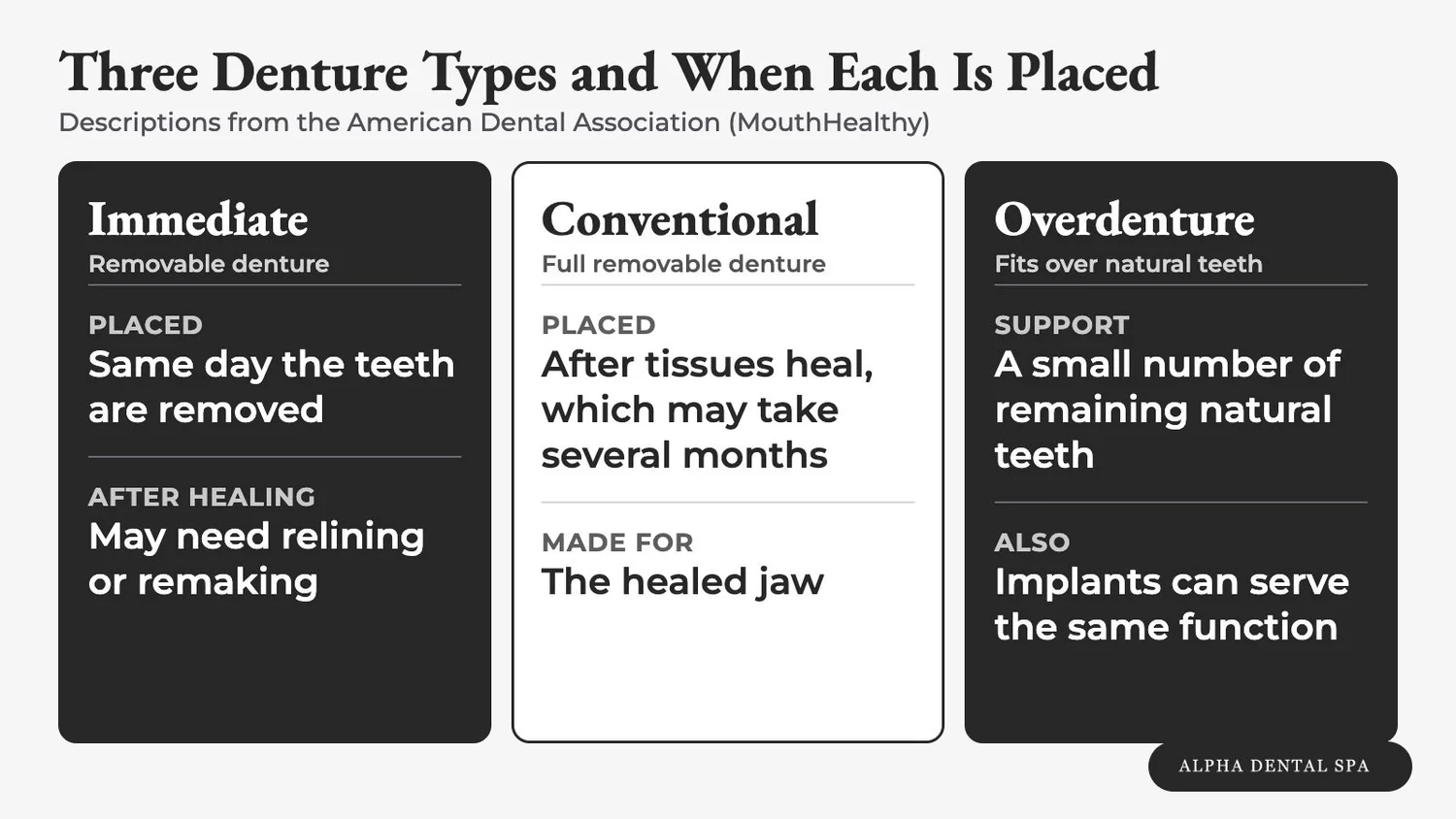
The graphic above compares the three denture types and when each is placed.
Why Do Immediate Dentures Need Relining or Remaking?
Immediate dentures need relining or remaking because the gums and bone shrink after extraction. The ADA says the denture may need relining or remaking once the jaw has healed.
A 2012 systematic review in Clinical Oral Implants Research measured this change. Horizontal ridge reduction averaged 3.79 mm at 6 months, compared with 1.24 mm of vertical reduction on the cheek side.
The same review found horizontal change of 29 to 63 percent at 6 to 7 months. Those numbers explain why an early denture feels loose as healing moves along.
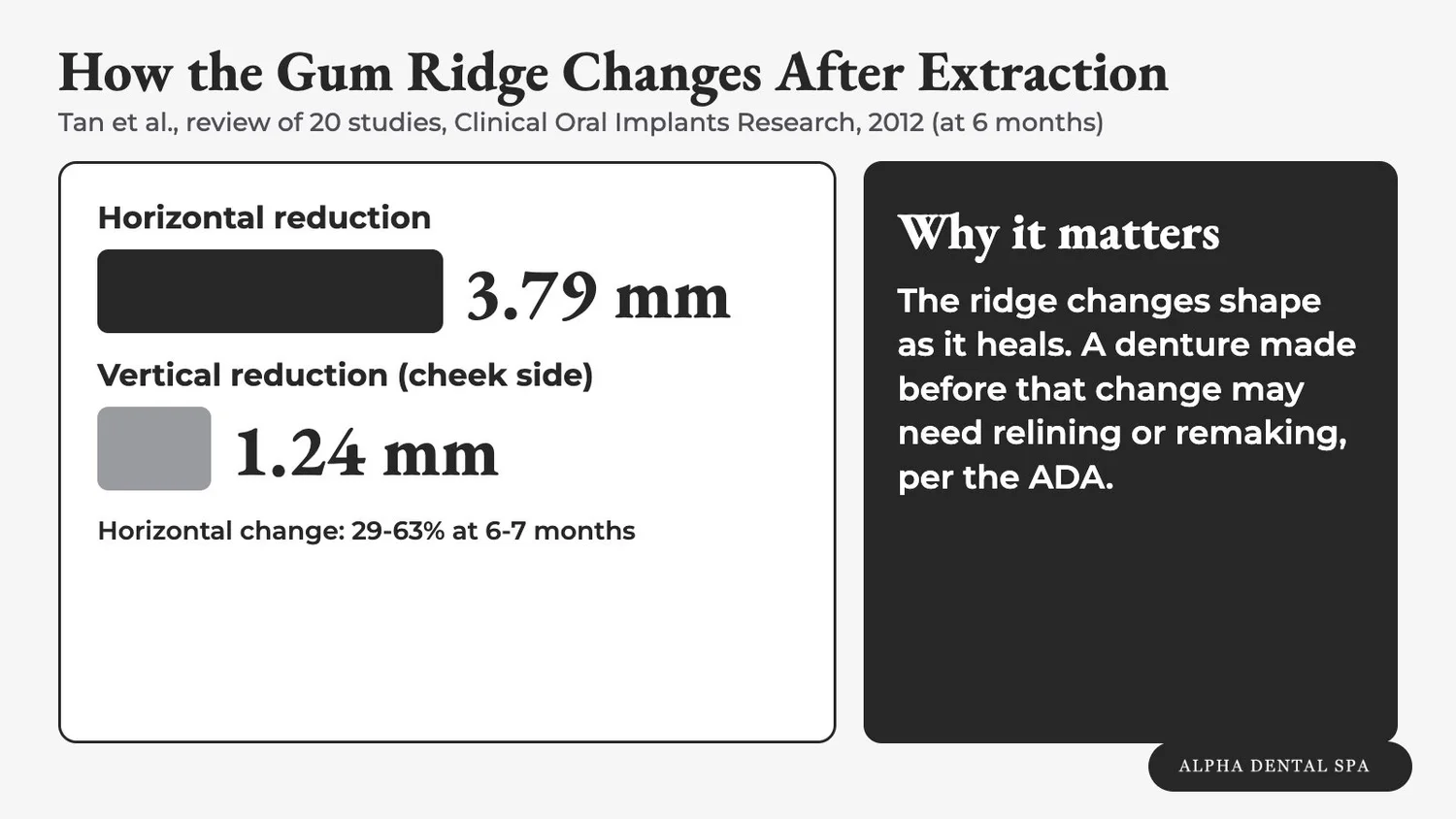
The chart above shows horizontal ridge reduction of 3.79 mm against 1.24 mm vertical at 6 months.
What Is the Difference Between a Reline, a Rebase and a Remake?
A reline, a rebase and a remake are three ways to restore denture fit. The ACP lists all three as responses to tissue change.
A reline adds new material to the tissue side of the denture. A rebase replaces the pink base while keeping the teeth. A remake builds a new denture from fresh impressions.
The ACP states that no evidence currently sets how often these steps should happen. The decision follows a thorough examination of you and your denture.
How Do You Know When a Denture Needs Attention?
A denture needs attention when it loses retention, stability or support, according to the ACP.
The ACP also lists inability to eat, cracked or missing teeth, and discoloration as reasons to replace a denture. Contact your dentist when any of these changes appear, rather than adjusting the denture at home.
Are Immediate Dentures Permanent If You Keep Wearing Them?
Immediate dentures are not permanent even if you keep wearing them. The ACP says dentures remain devices with limited lifespans.
Long-term wear is possible with regular dental visits, and a related post on denture lifespan covers replacement signs. Dentists then reline, rebase or remake the denture as the ridge changes, and follow-up checks catch problems early.
The ACP warns that a poorly fitting denture can cause tissue inflammation or ulceration. Chronic irritation is the reason regular fit checks matter more than the label on the denture.
When patients ask "are immediate dentures permanent" after a year of wear, Dr. Hayat looks at fit first. A denture that still holds well may stay in service, and a loose one is relined or remade.
Can Dentures Be Permanent at All?
Dentures can be permanent only when implants hold them in place. MedlinePlus says implants are permanent and replace both roots and teeth.
Removable dentures never reach that status. The ACP position statement says they should not be considered permanent restorations. Gradual tissue change beneath the denture base is the cause.
Patients who ask "are dentures permanent" learn that removable dentures are not. The same denture can still serve for many years with care. Your dentist can explain which option fits your gums and bone.
Can Immediate Dentures Be Converted Into Final Dentures?
Immediate dentures can be converted into final dentures when a reline restores the fit. The ADA lists relining as the alternative to remaking.
A reline adds material to the tissue side, and the ACP says the dentist decides after a full examination. A remake follows when the base, teeth or bite no longer work.
Can You Get Permanent Dentures After Immediate Dentures?
You can get a final set of dentures after immediate dentures once your gums and bone settle. The ADA says a conventional denture follows healing.
Healing may take several months, according to the ADA. The dentist then takes new impressions, so the final denture follows your healed ridge.
The steps below show what usually comes next, based on ADA descriptions of the two denture types.
- Wear the immediate denture through the early healing period and attend every follow-up visit.
- Report sore spots or looseness so the dentist can adjust the fit.
- Have the dentist confirm that the jaw has healed.
- Choose between a reline, a remake or a conventional denture.
- Return for regular checks so the fit stays stable.
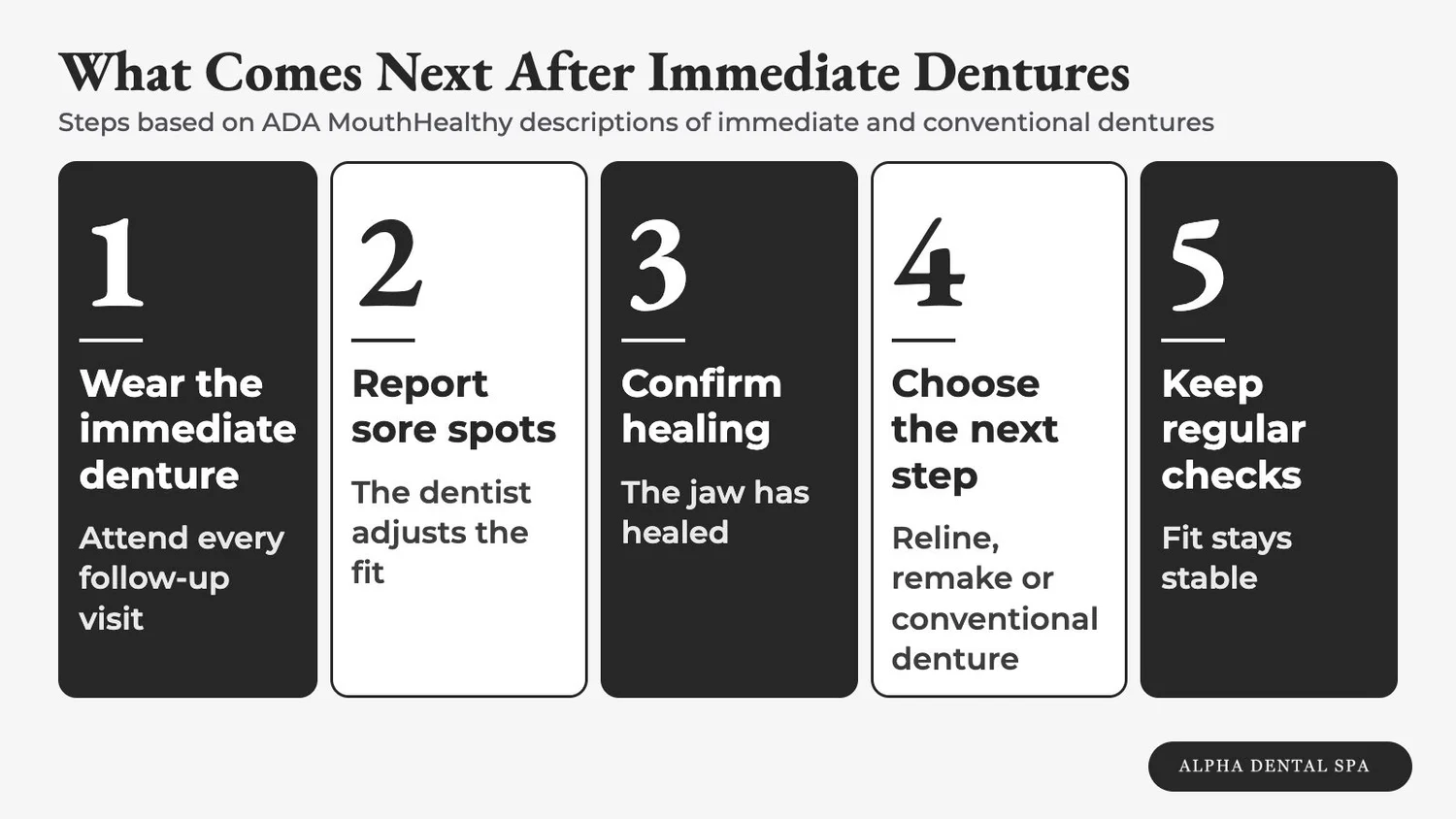
The flow above summarizes the five steps for moving from an immediate denture to a final one.
Can I Get Permanent Dentures Right After Extraction?
Permanent dentures cannot be made on the extraction day, because the ADA says conventional dentures are made after tissues have healed.
An immediate denture covers that waiting period. Your dentist plans the extraction day and the denture together, so you are not left without teeth.
Can You Have Permanent Dentures Without Implants?
You can have a long-lasting denture without implants, but MedlinePlus reserves the word permanent for implants, which replace roots and teeth.
The ADA also lists the overdenture, which fits over a few remaining natural teeth. Implants can serve the same function for an overdenture.
A 2002 consensus in Gerodontology, the McGill statement, named the mandibular two-implant overdenture the first choice standard of care for edentulous patients. Your dentist decides whether that route suits your jaw.
Implant placement on extraction day is a separate topic, covered in a post on immediate implants.
What Does Permanent Mean for Dentures?
Permanent for dentures means a tooth replacement that stays fixed in your mouth, and MedlinePlus applies that word to implants.
Removable dentures come out for cleaning, which the ADA recommends daily. Fixed options need surgery and healing, so the dentist reviews your health and bone first.
The ADA offers the overdenture as a middle path. A few natural teeth or implants give the denture more stability.
Short-term options such as a flipper tooth only fill front gaps while healing continues.
Full dentures cover an entire arch, while a partial denture replaces only some teeth.
How Long Do You Wear Immediate Dentures Before Final Dentures?
You wear immediate dentures until your tissues heal enough for a final fit. The ADA says that healing may take several months.
No fixed number applies to everyone, and your finished complete dentures follow your healing. The ACP states that no evidence sets a standard interval for relines, rebasing or remakes.
Your dentist checks fit at follow-up visits and decides the timing. Early sore spots are a normal reason to book an adjustment, as the ADA notes follow-up visits are generally needed.
What Can You Expect in the First Weeks With Immediate Dentures?
You can expect a few weeks of adjustment. The ADA says new dentures may feel awkward until you get accustomed to them.
The ADA states that dentures may feel loose while your cheek and tongue muscles learn to hold them. Minor irritation or soreness is not unusual, and saliva flow may temporarily increase.
The ADA adds that these problems should go away as your mouth adjusts. Call your dentist if soreness continues or the fit worsens.
- Attend every follow-up visit your dentist schedules.
- Brush your gums, tongue and roof of the mouth each morning with a soft brush.
- Store the denture covered in water when you are not wearing it.
Food choices matter during this stretch, and a post on chewing gum lists habits to skip while healing.
What Else Should You Know About Immediate Dentures?
Can You Eat Normally With Immediate Dentures?
You can eat with immediate dentures, starting with soft foods. MedlinePlus advises soft foods until the wound heals and no hard or crunchy foods for 1 week.
MedlinePlus also says a socket takes 1 to 2 weeks to heal, while bone and tissue take longer. Chewing feels easier as the ADA-described adjustment of a few weeks passes.
Do Immediate Dentures Fit Well?
Immediate dentures fit as well as the models allow at first. The ADA says they may need relining or remaking after the jaw has healed.
Fit changes as swelling settles and the ridge shrinks. A follow-up visit lets the dentist adjust the denture.
How Long Does It Take to Get Used to Immediate Dentures?
Getting used to immediate dentures takes a few weeks, according to the ADA.
The ADA says cheek and tongue muscles need that time to hold the denture in place. Speech and eating feel more natural as that happens.
Should You Sleep in Immediate Dentures?
You should follow your dentist's instructions on sleeping in immediate dentures, because research links sleeping in dentures with health concerns.
A 2015 Journal of Dental Research study followed adults aged 85 and older. Of 453 denture wearers, 186 (40.8 percent) wore dentures during sleep. Sleeping in them carried a hazard ratio of 2.38 for pneumonia.
Your dentist may ask for a different routine in the first days after extractions. Follow that plan, then use the research as a reason to remove dentures at night once you are told to.
Can You Use Denture Adhesive With Immediate Dentures?
You can use denture adhesive when your dentist recommends it. The ADA says to look for products with the ADA Seal of Acceptance.
The ADA asks users to read the instructions and follow them exactly. Adhesive does not fix a worn denture, so a loose fit still needs a dental visit.
What Does Complete Tooth Loss Look Like Across the United States?
Complete tooth loss affected 12.9 percent of adults aged 65 and older in 2015 to 2018, according to the CDC.
The CDC found 8.9 percent at ages 65 to 69 and 10.6 percent at ages 70 to 74. At age 75 and older the figure was 17.8 percent.
Frequently Asked Questions
How Long Do Immediate Dentures Last?
Immediate dentures last as long as their fit holds. The ACP says no evidence sets a fixed schedule for relines or remakes.
Your dentist examines retention, stability and support, then recommends a reline, rebase or remake.
What Is the Difference Between Immediate and Permanent Dentures?
The difference between immediate and permanent dentures is timing. The ADA places immediate dentures on extraction day and conventional dentures after healing.
MedlinePlus reserves the word permanent for implants, so a conventional denture is the final removable stage.
Are Immediate Dentures Temporary or Permanent?
Immediate dentures are temporary in design, and the ADA says they may be relined or remade after the jaw heals.
Long-term wear is possible with a good fit and regular checks.
Who Needs Immediate Dentures?
Anyone having their remaining teeth removed can ask about immediate dentures. The ADA says they let you avoid a toothless healing period.
Your dentist reviews your health and extraction plan before recommending the option.
Can You Get Permanent Dentures Instead of Immediate Dentures?
You can get a conventional denture instead. The ADA says it is made only after tissues heal, which may take several months.
The healing period would be spent without a denture.
Why Do Dentures Stop Fitting?
Dentures stop fitting because the residual ridges resorb, and the ACP says this loses retention, stability and support.
A visit to the dentist can restore fit through a reline, rebase or remake.
How Does Alpha Dental Spa Help With Immediate Dentures?
Alpha Dental Spa helps by planning your extractions and your denture together, so the denture is ready when your teeth come out.
We follow ADA and ACP guidance on fit checks. Dr. Hayat answers questions about denture options in our Cinnaminson office, including what comes after the first denture.
Patients who ask "can immediate dentures be permanent" get a plain answer and a plan for relines or a final denture. We review how the denture fits, how your gums are healing, and whether a remake or a reline suits you.
A broken or painful denture falls under denture emergency care.
Cracked teeth, a split base or a sudden change in fit all deserve a prompt call. The ACP lists these among reasons to replace a denture.
Routine questions are welcome too. Dr. Hayat explains the follow-up schedule, cleaning steps and normal soreness. That plan helps you know what to expect before each visit, and it covers who to call between visits. An appointment is easy to set up when you book a visit.
The team at Alpha Dental office welcomes questions about the steps after extractions.